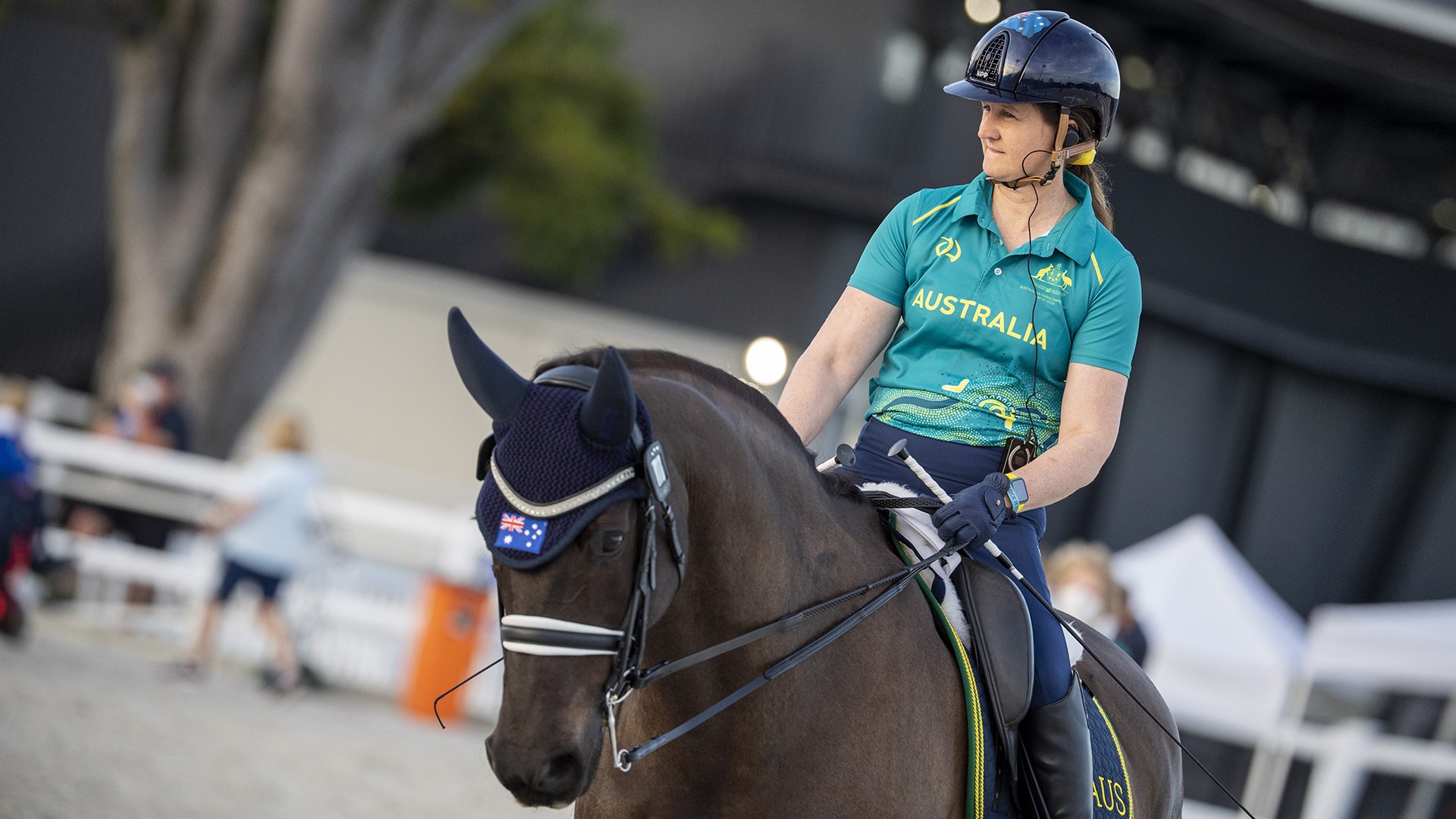
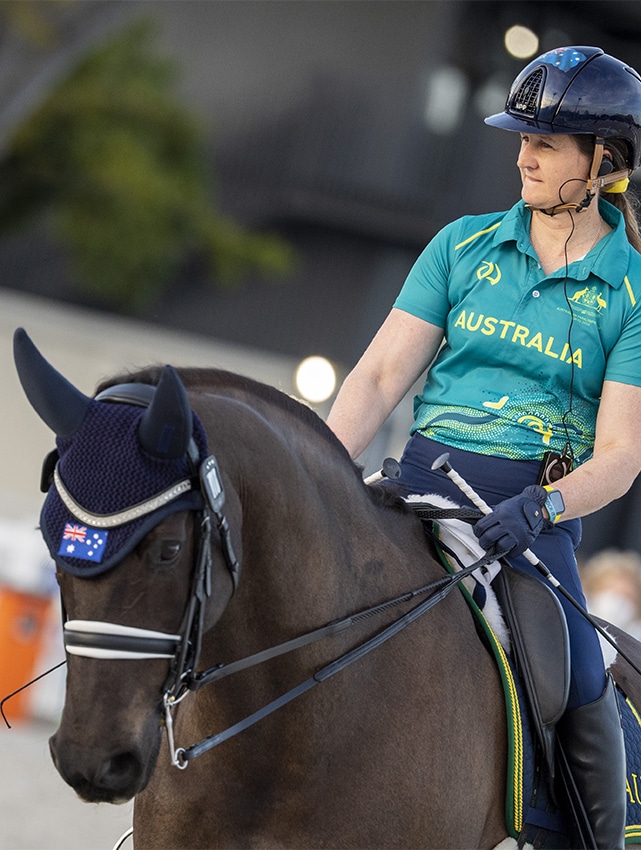
Three-time Paralympian Sharon Jarvis, pictured here at the 2021 Tokyo Paralympic Games with Romanos. Image by Jon Stroud Media.


Ten years on from the Rio Paralympics, equestrian Sharon Jarvis keeps striving for the podium and refuses to let stereotypes get in her way.
The three-time Paralympian and Order of Australia recipient says more needs to be done to showcase the experiences of para equestrians on the global stage.
One of the most experienced and skilful para equestrian riders in the country, Sharon says that people assume that to ride, particularly at an elite level, “you’re made of money” or you “started at Riding for the Disabled”.
The reality is often far from it, with riders putting in blood, sweat, and tears to get into the arena.
Assumptions are also made about the kind of horse that is required based on the images used by the media portraying what riding with a disability might involve. Sharon reflects that people thought she, too, was riding “an RDA pony who was cute and sweet because it was their only association with riding and disability”.
These assumptions were compounded by the careful and measured time frame it takes to build a physical and emotional relationship with a horse. The kind that will foster success.
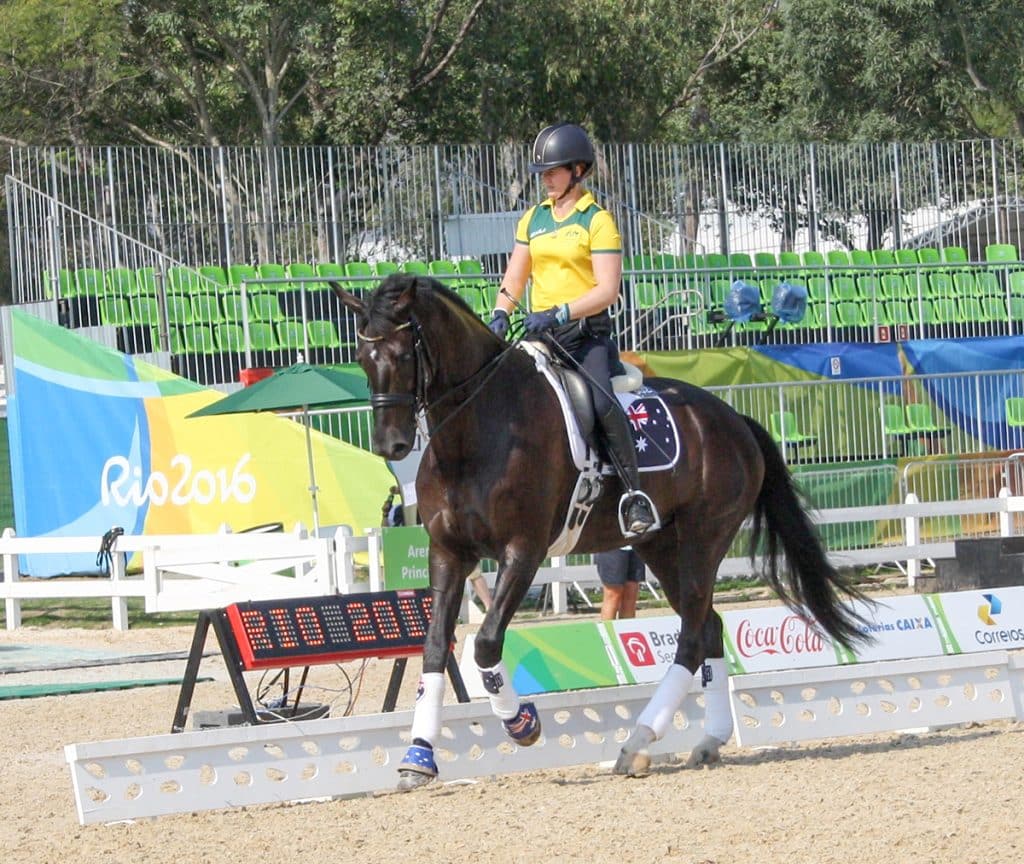
Sharon at the 2016 Rio Paralympics with mare Ceasy.
“I had huge doubters. I doubted myself because he was slow progressing,” Sharon explains. “People were questioning the owner; they said I wasn’t winning or getting high enough scores.”
But Sharon didn’t give up, knowing that what she and stallion Lord Lamarque (affectionately known as Bug) had was worth the effort. “It was time, patience and a pure love of the horse that got us where we did. Bug had the most awesome temperament”
For Paralympians, there is a backstory that the media wants to highlight. But Sharon says too often their real lives are neglected. “Whether it’s things we’ve challenged [like] ableism, or survived, we have a lot to offer, and I think sometimes that can be missed,” Sharon points out. “Only showing certain athlete profiles doesn’t broaden the knowledge of the general public.”
PUBLIC NEEDS TO BE EDUCATED
Sharon loves sharing her experiences during the Beijing, Rio and Tokyo Paralympics with those around her. “People shared what you did,” she notes. But she also points out that despite being included in the Games since 1996, Australians still think it’s a new sport. “Educating people about where the sport has come from should be a massive part of promotion.”
“We have a lot to offer,
and I think sometimes
that can be missed.”
Sharon was partnered with different horses at each of her Paralympic appearances: at Beijing in 2008 she rode Applewood Odorado, at Rio de Janeiro in 2016 she rode Ceasy, and at the 2021 Toyko Games she rode Romanos.
The relationship between horse and rider helps to make each movement effortless. A seamless connection between two beings is a hard-earned skill, but it also means that spectators often are unable to appreciate the technique, perseverance and concentration it involves.

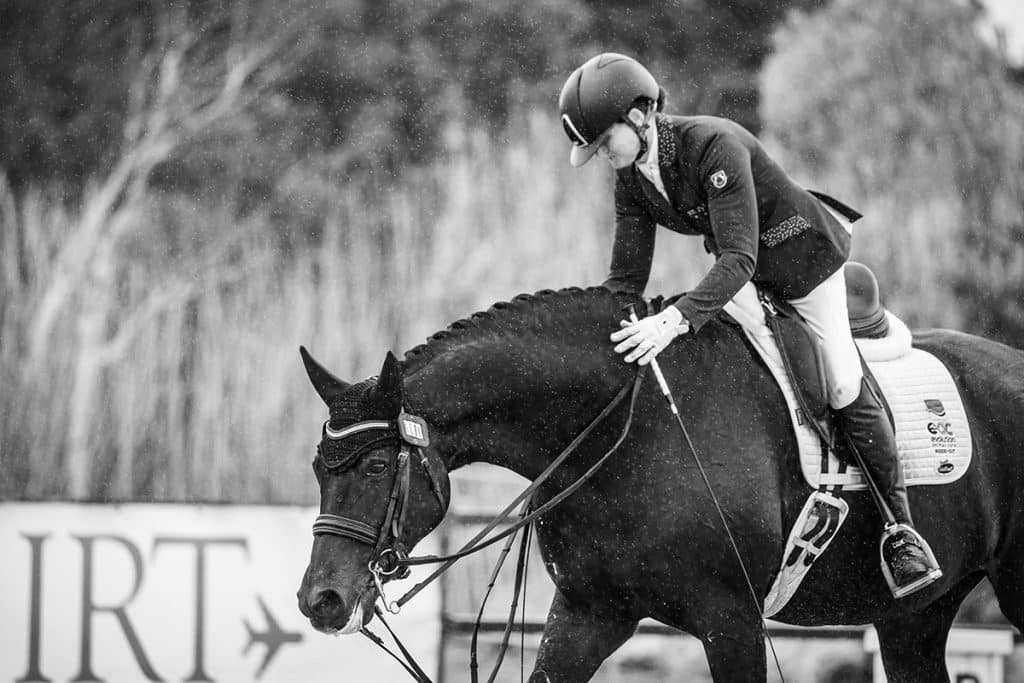
Sharon with her 2021 Tokyo Paralympic partner, Romanos. Image by One Eyed Frog Photography.
“The general public needs to be educated that you don’t just sit there and do nothing,” says Sharon. “The more refined our skills are, the better the horse can go.”
A Grade IV para equestrian rider, she can conduct walk, trot and canter tests, and in Freestyle Tests may show lateral work and single flying changes. “Horse and rider have their own special communication; if we want the horse to do something, we have to signal to them subtly.”
Having ridden him for 12 years in the lead-up to the 2024 Paris Paralympics, Sharon offered Bug to help Grade I rider Stella Barton achieve her goal of also becoming a Paralympian.
“I’ve been riding Bug for 12 years,” Sharon reflects. “But I told Stella, ‘You have to have a ride. When we saw Bug and Stella for the first time, that was a special moment. That’s amazing. It was his nature and temperament; Bug’s just an awesome guy.”
Sharon explains that the powerful connection between Stella and Bug was not by accident. “People think Bug adapted to Stella magically,” Sharon says. “But I don’t ride with much leg. Even though we have different disabilities, it worked because Bug knew his job.”
The partnership was a success – together, Stella and Bug represented Australia at the Paris Paralympics.
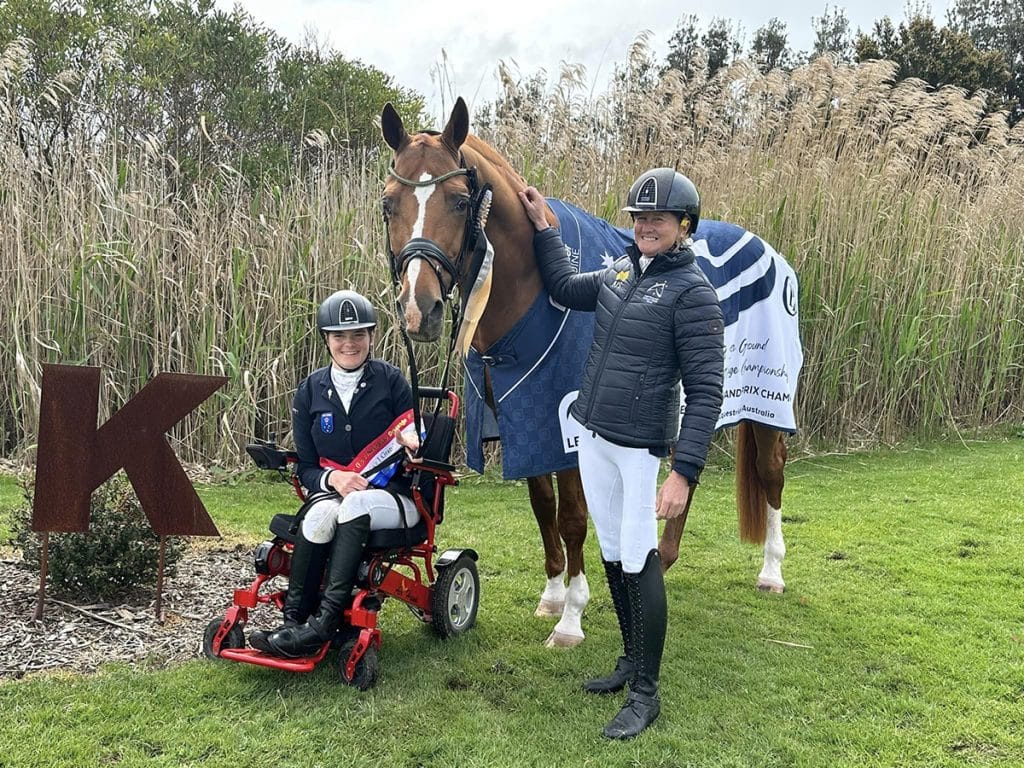
Sharon with Stella Barton and Lord Larmarque. Image courtesy of Stella Barton Para Equestrian.
“It was his nature and
temperament; Bug’s just
an awesome guy.”
Sharon is committed to helping para-equestrians rise through the ranks and achieve their goals. A key part of this mission, Sharon advises, is education about the history of the sport.
“Educating people about where the sport has come from should be a massive part of promoting our sport more. They should use the stories of athletes who are Paralympians from the early days.” This would help ensure Paralympic legacies are not forgotten. EQ
Related articles
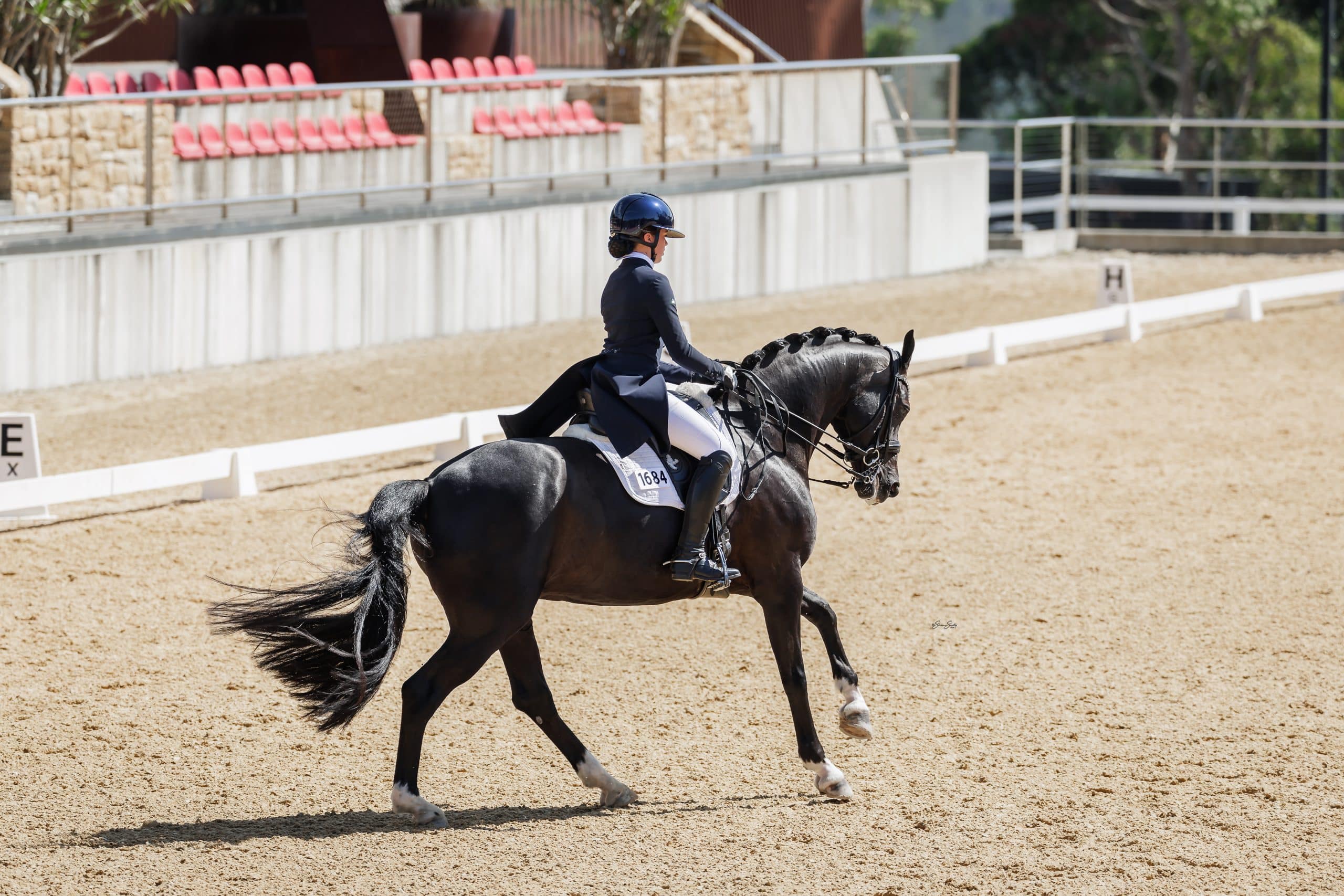
For as long as Marley Ara Yates can remember, horses have been part of her world. Long before she entered an arena in tails or rode down an FEI centerline, she was sitting atop her mother’s Quarter Horse, completely captivated by the animals that would eventually shape her life. Now she is making her mark as a young dressage rider to watch with many wins on her horse Secret Rose in the CDI Junior classes.
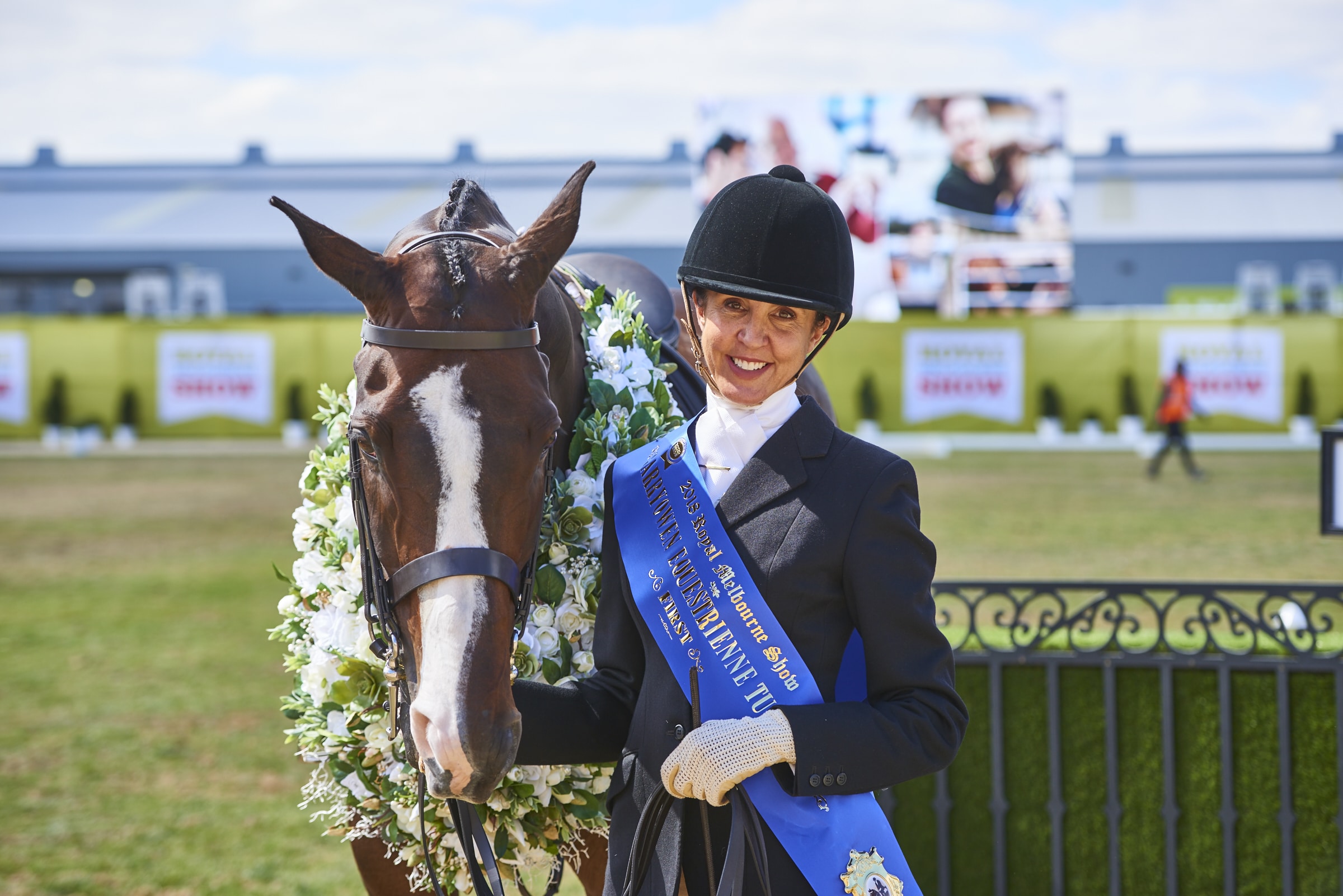
Few classes in Australian showing carry the prestige and history of the Garryowen. Rebecca Farrow’s journey from a devoted turnout competitor to one of the most successful Garryowen competitors of recent decades reflects the tradition, dedication and horsemanship the class demands.