
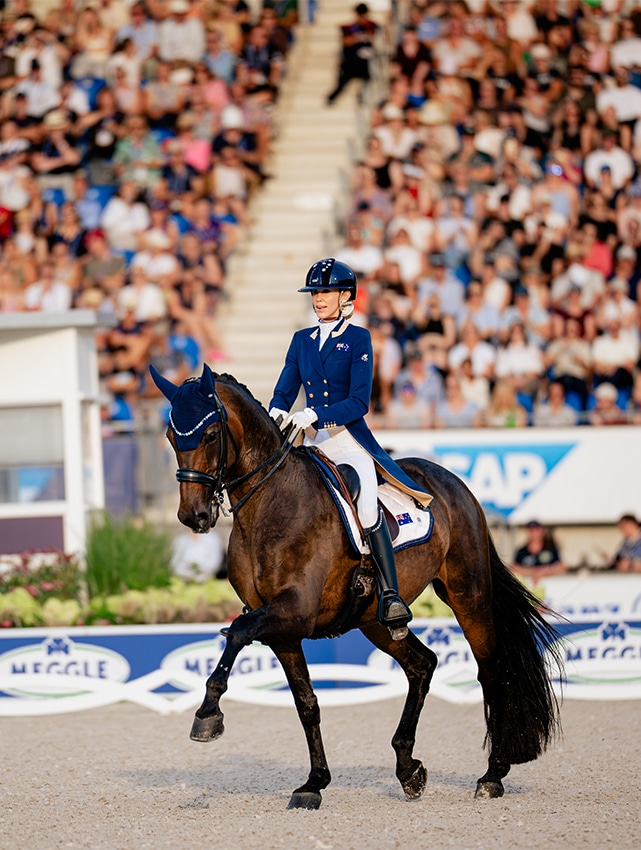
Australian Simone Pearce and Will Marq made an impression at the FEI World Championships in Aachen for all the right reasons. Image Evergem Media House.


With the dust finally settled following the FEI World Championships in Aachen, it is interesting to reflect on the extraordinary quality of dressage we witnessed at the very highest level.
With the Los Angeles Olympic Games only two years away, the obvious question is: which of the horses we saw here are likely to make an even greater impression in the years ahead?
There were several combinations that appear to have considerable improvement still to come.
One horse that immediately comes to mind is Denoix PCH, ridden for Germany by Katharina Hemmer. This stunning chestnut has wonderfully fluid, flowing paces and the ability to achieve at least an eight for virtually every movement in the Grand Prix. He has been difficult in the past, but he now appears to be coming into his own. There is still confidence and consistency to develop, and in another two years I believe this horse could be extremely difficult to beat.
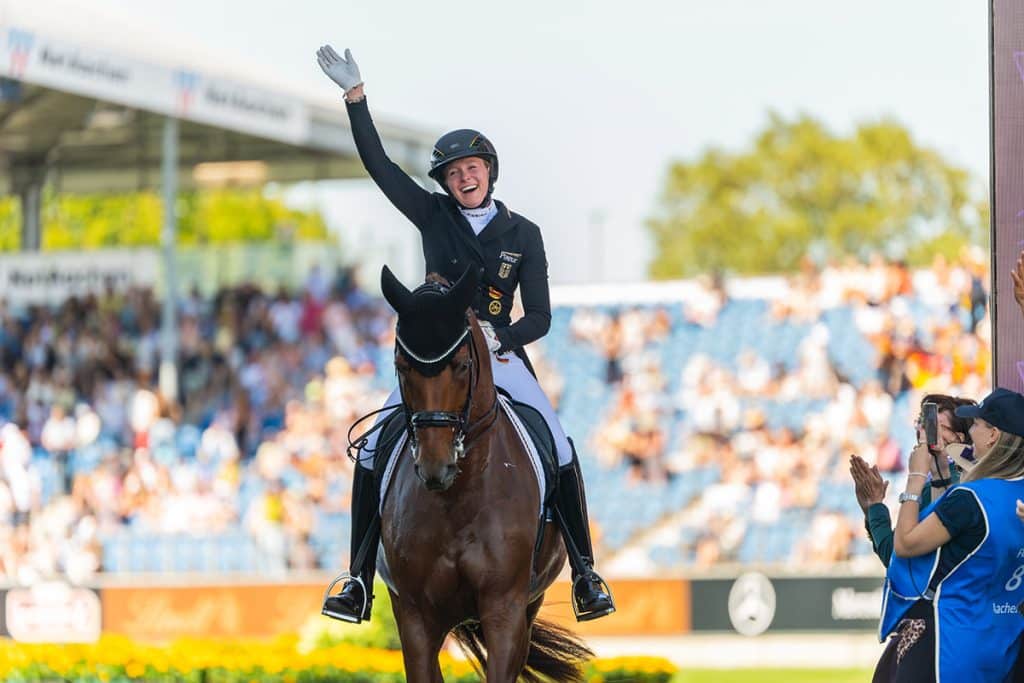
Katharina Hemmer of Germany and Denoix PCH. Image by FEI/Łukasz Kowalski.
“One horse that immediately
comes to mind is Denoix PCH.”
You certainly cannot look past Belgium’s Justin Verboomen and Zonik Plus. This beautiful black stallion is wonderfully light-footed and impressive in the contact. He is still young and needs to develop further strength over the back and greater carrying capacity, together with more regularity in the piaffe.
With greater strength and connection over the back, the canter should also develop more expression and ground cover. He already appears to have all the Grand Prix movements at his mercy. It is now a matter of developing further cadence, power and expression as he matures.
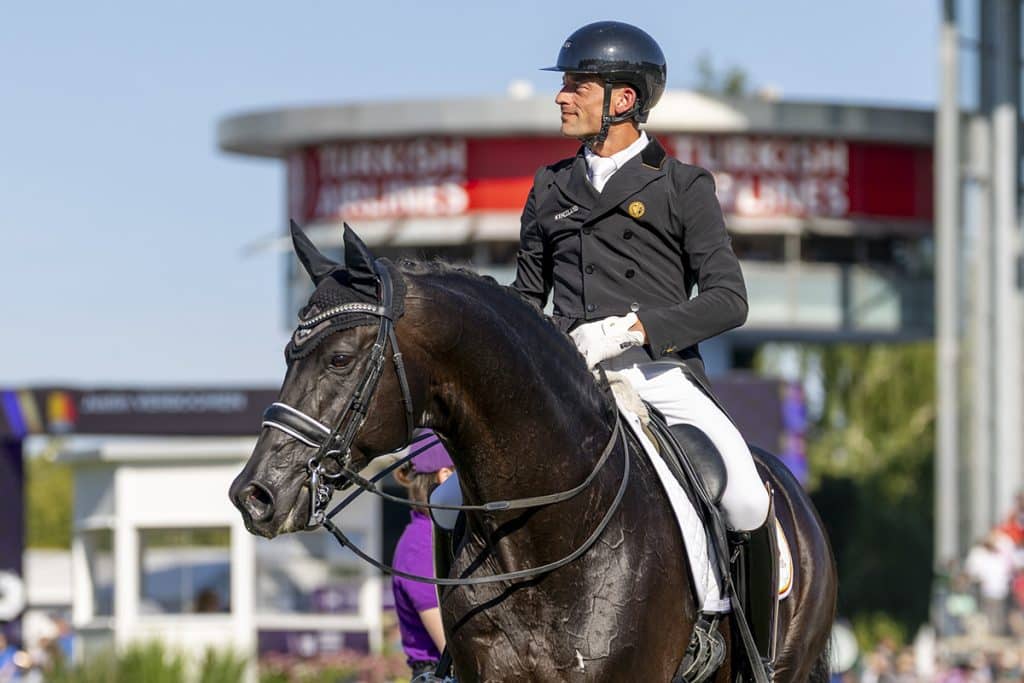
Justin Verboomen of Belgium and Zonik Plus. Image by FEI/Leanjo de Koster.
Then, of course, there is Wendy de Fontaine and Isabell Werth for Germany. Costly mistakes in the tempi changes occurred throughout the championships, and you can be fairly certain that Isabell will address those. There are also more marks available through greater fluency, elasticity, and upward stretch through the forehand in the passage. Wendy continues to improve, and with Isabell — an absolute magician — guiding her development, there is surely still considerably more to come.
“There is surely still
considerably more to come.”
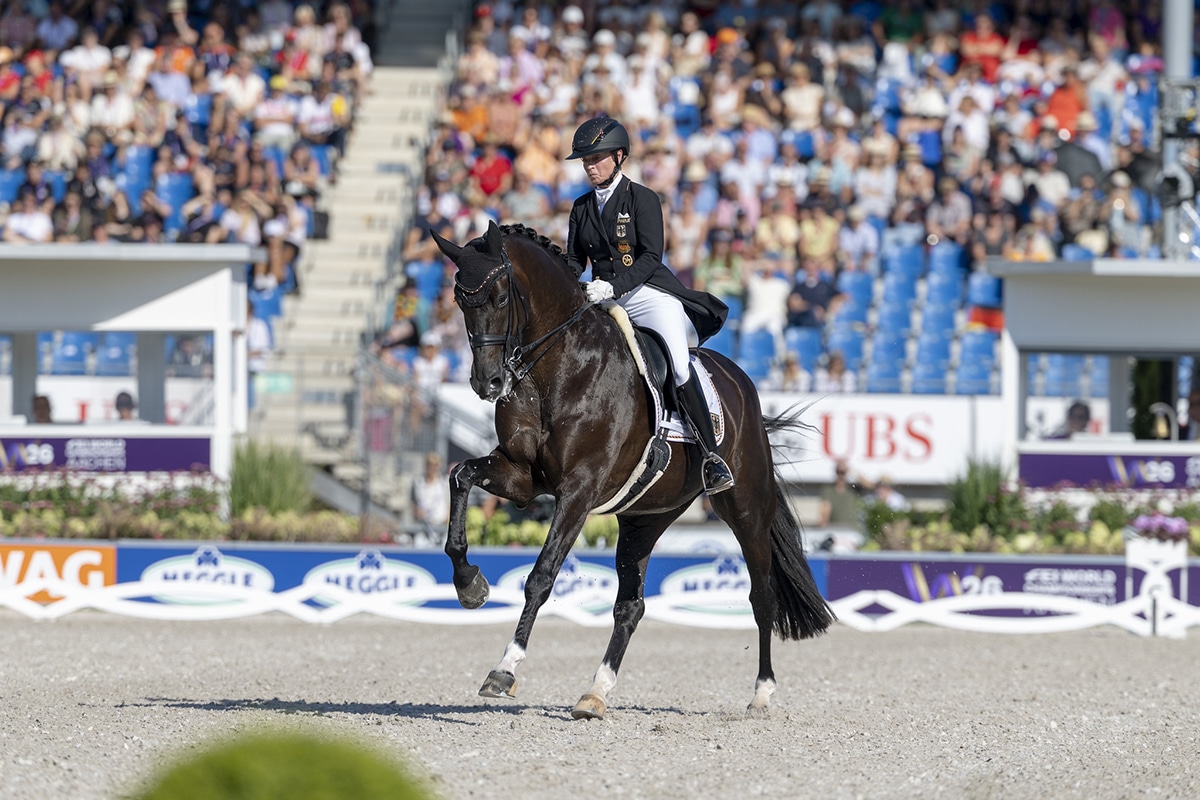
Isabell Werth of Germany and Wendy de Fontaine. Image by FEI/Leanjo de Koster.
Jagerbomb and Becky Moody for Great Britain had a somewhat difficult beginning to their Championship, but this horse also possesses enormous talent throughout the Grand Prix work. There are further marks to be found through increased suppleness, flexion and bend, particularly in the lateral movements.
Another two years of strength and experience could make a world of difference. Marks were also lost in the halts through a lack of immobility — something readily improved — and as the lateral work becomes increasingly supple and fluent, this combination could become extremely difficult to beat.
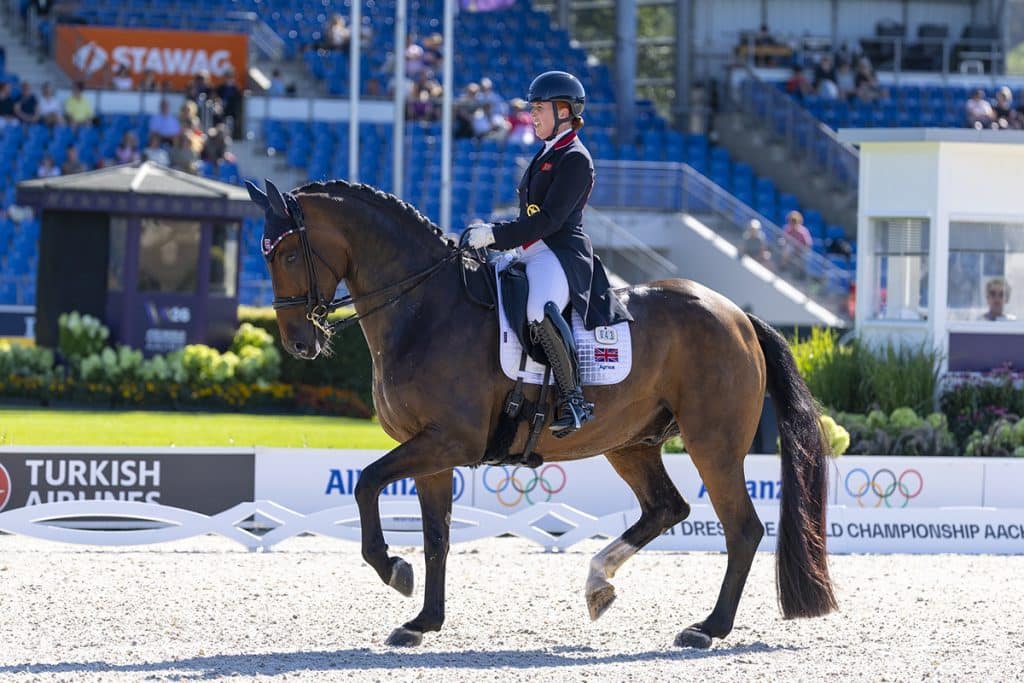
Becky Moody of Great Britain and Jagerbomb. Image by FEI/Leanjo de Koster.
“Another two years of strength
and experience could make
a world of difference…”
Another enormously exciting prospect is the beautiful black stallion Mauro Turfhorst NOP, ridden by Dinja van Liere. At only nine years of age, he is exceptional. His temperament is perhaps one of his greatest assets: he has the ability to switch on and become elastic and expressive, yet moments later switch off completely and produce a relaxed, swinging and beautiful walk.
That combination of athleticism and temperament is very special. He appears to lack nothing in any of the Grand Prix movements and, at only nine, surely has the potential to become one of the superstars of international dressage.
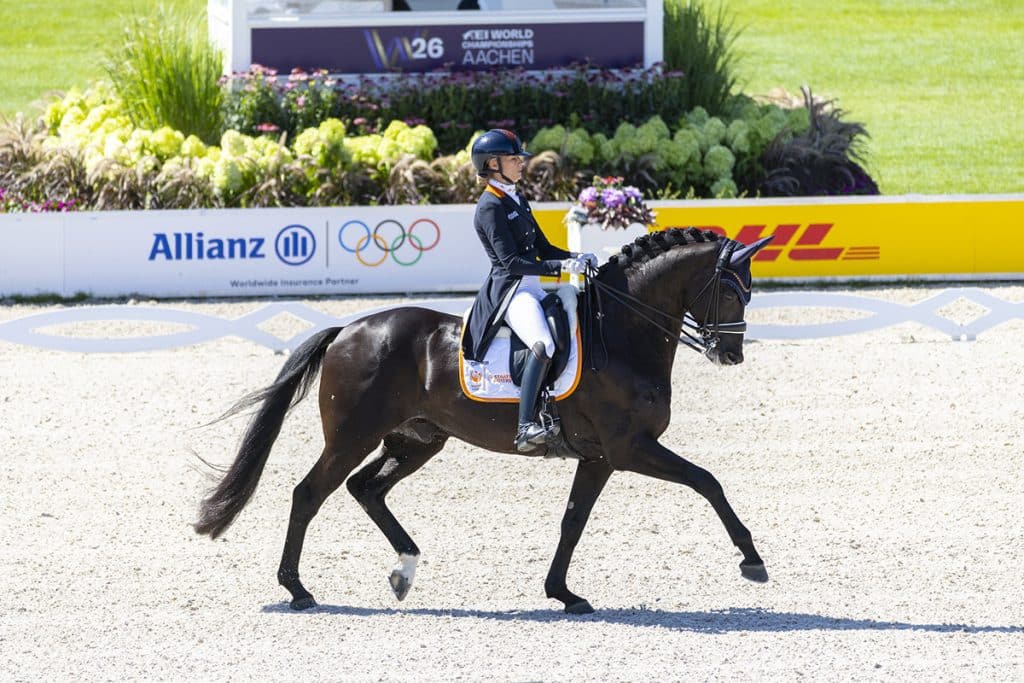
Dinja van Liere of the Netherlands and Mauro Turfhorst NOP. Image by FEI/Leanjo de Koster.
ENCOURAGING FOR AUSTRALIA
For Australians, it is impossible not to be enormously excited and proud of Will Marq and Simone Pearce. To make both the Grand Prix Special and Freestyle at this Championship with this ten-year-old was an outstanding achievement.
The trot work shows great rhythm, energy and elasticity, while the canter is huge and uphill, as are the changes. The piaffe is impressive, but the passage still needs to develop the strength to carry, push and cover more ground. Will Marq finds the transitions in and out relatively easy, but at present the passage does not yet have the expression and ground cover required for the very biggest marks.
At only ten years old, and knowing Simone’s ability to develop a Grand Prix horse, this is a seriously exciting combination for the future — and particularly encouraging for Australian dressage.
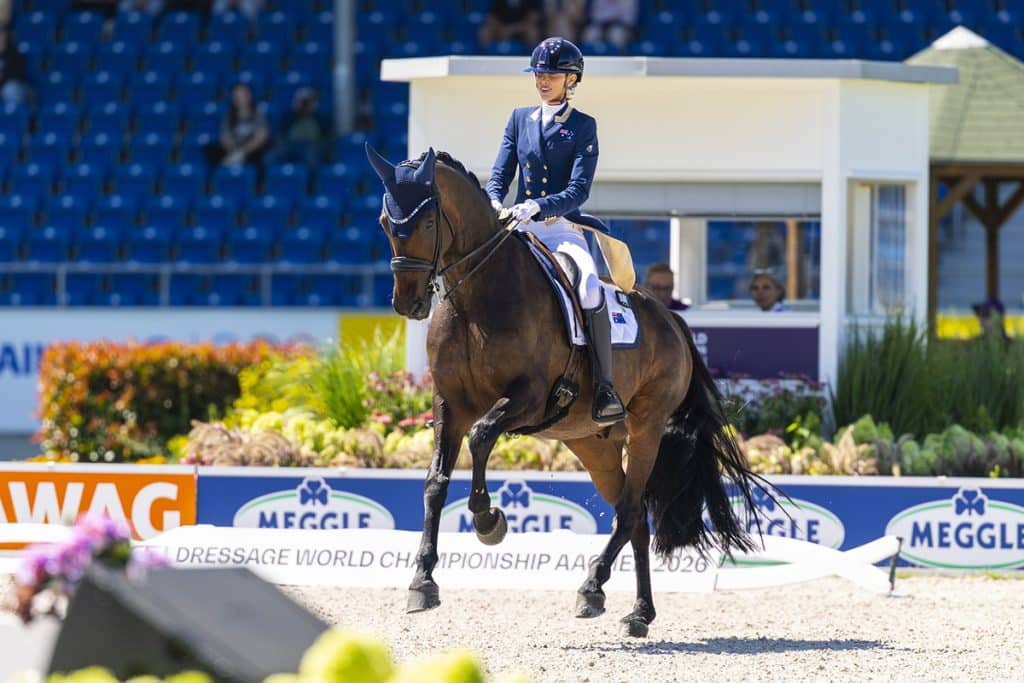
Simone Pearce and Will Marq. Image by FEI/Leanjo de Koster.
There are undoubtedly many other exciting horses waiting in the wings, either just beginning Grand Prix or preparing to make their international breakthrough. Over the next 12 months we will surely see several new combinations emerge.
But from what we witnessed in Aachen, these are some of the horses that I believe will be among those everyone else will be trying to beat as the Los Angeles 2028 Olympic Games draw closer.
Perhaps the most encouraging aspect of this World Championship was not simply the quality of the horses, but the quality of the riding. The improvement in harmony, athleticism and the marks being achieved shows just how rapidly the sport continues to develop.
And then there was the crowd. To see more than 40,000 people filling the stands for the Grand Prix Freestyle in Aachen was an extraordinary sight and a wonderful testament to the appeal of top-level dressage.
Anyone suggesting that dressage is becoming a dying sport should have been sitting in Aachen. Dressage is very much alive — and the road to Los Angeles is going to be fascinating. EQ
Related articles
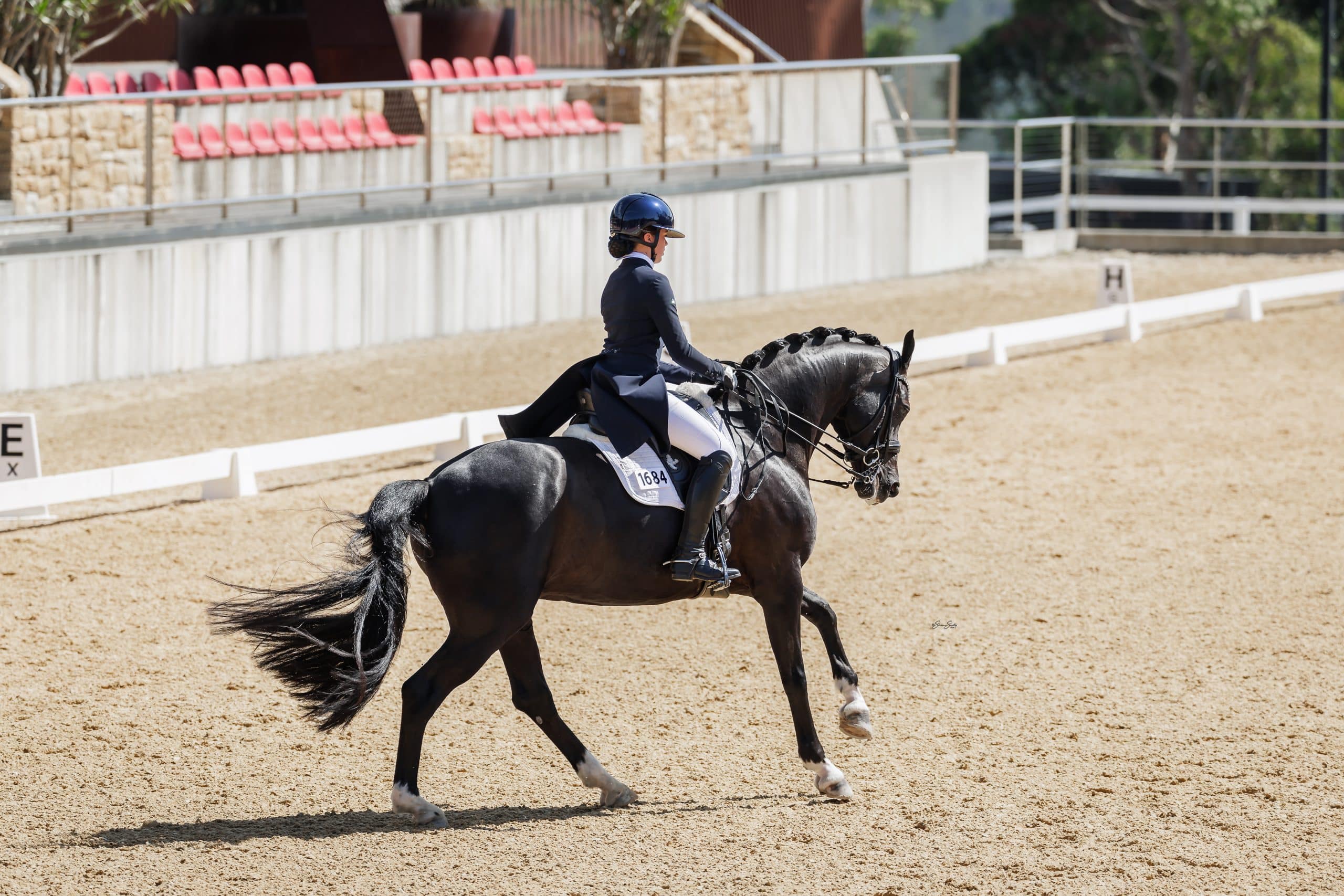
For as long as Marley Ara Yates can remember, horses have been part of her world. Long before she entered an arena in tails or rode down an FEI centerline, she was sitting atop her mother’s Quarter Horse, completely captivated by the animals that would eventually shape her life. Now she is making her mark as a young dressage rider to watch with many wins on her horse Secret Rose in the CDI Junior classes.
With the 2026 breeding season approaching, International Horse Breeders principal Glenis Dyason highlights leading Hanoverian-ranked stallions available through frozen semen. From proven performers to emerging sires, Australian breeders can access top dressage and jumping genetics.