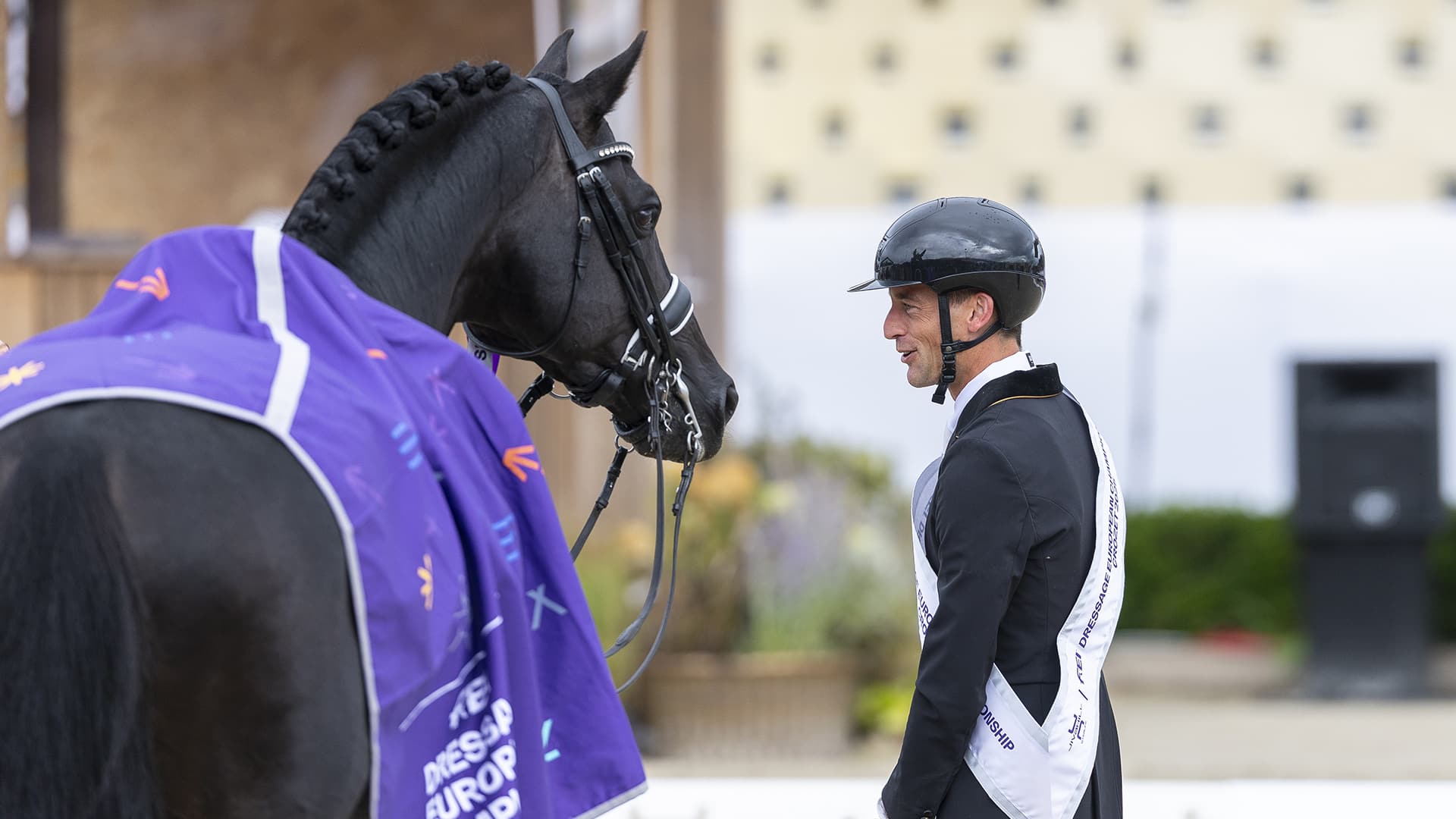
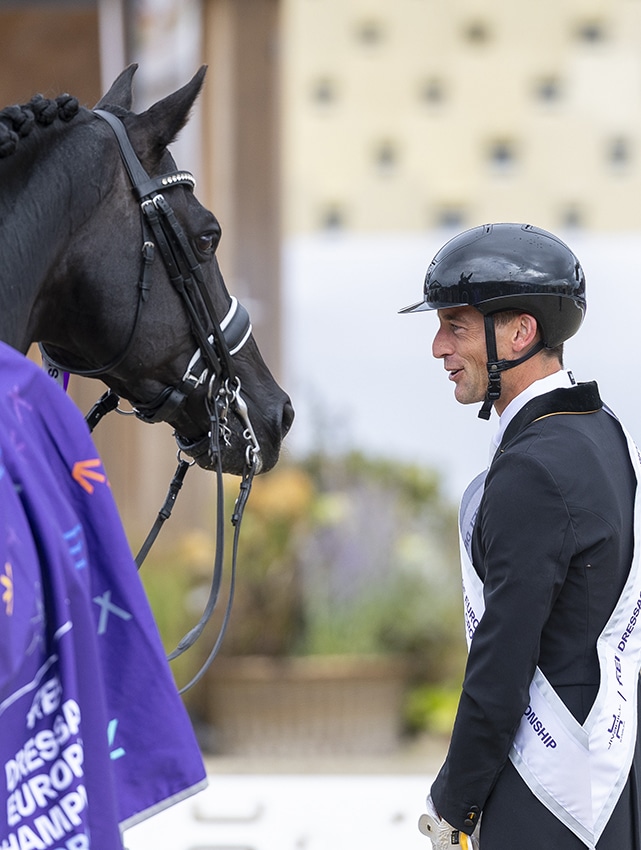
Belgium’s Justin Verboomen and Zonik Plus. Image by FEI/Leanjo de Koster.


It is interesting, and indeed encouraging, to see that the FEI has decided to make changes to the international dressage tests, introducing new movements and rearranging others. These changes reflect something far more significant than simply rewriting a test. They reflect the evolution of the sport itself.
The philosophy of dressage, the way horses are bred, trained, presented and judged, has changed considerably over the past five years. There is now far greater emphasis on harmony, relaxation, adjustability and the genuine development of collection.
And surely that can only be for the better.
Looking back at young horse classes, there was a time when much of the emphasis in judging appeared to be placed on expression, extravagance and enormous, forward-going paces. The bigger and more flamboyant the movement, the more impressive the horse appeared.
Not surprisingly, breeders responded to what the sport was rewarding. They wanted to produce horses that riders wanted to buy, and so the breeding industry increasingly concentrated on horses with huge, open, ground-covering movement and spectacular expression. That was the flavour of the time.
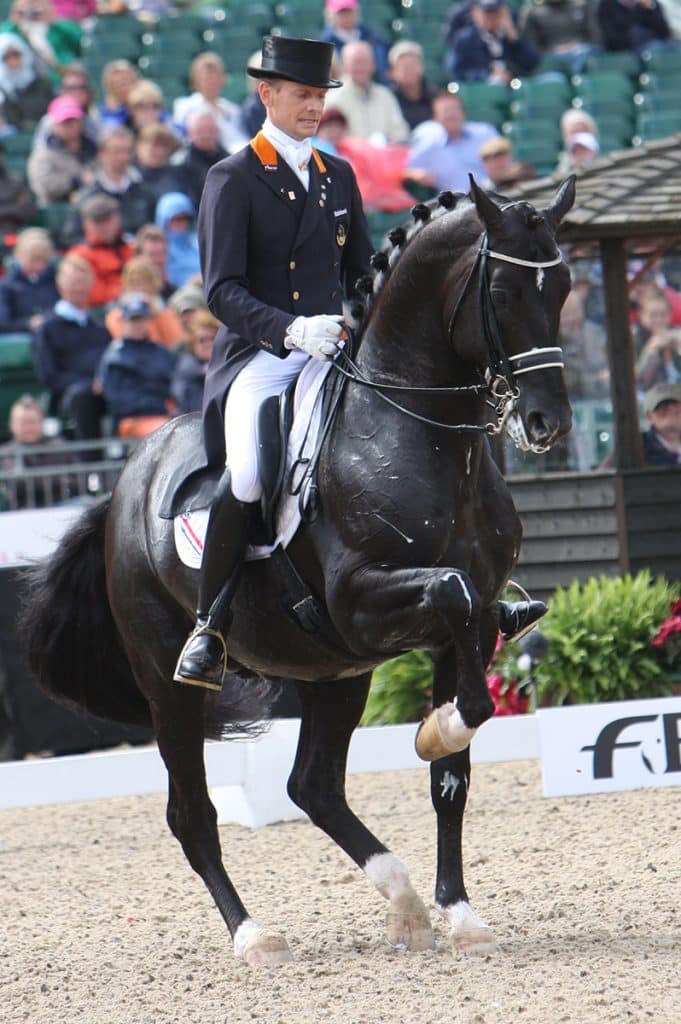
Edward Gal and Totilas in 2009, the year they set world records in the Grand Prix and Grand Prix Freestyle tests. Image by Roger Fitzhardinge.
“Judges are increasingly
looking for fluency,
ease, adjustability.”
There is no doubt that these horses could be breathtaking to watch, but the question was always whether those enormous paces could be developed into genuine collection, balance and self-carriage. Today, with the increasing emphasis on horse welfare, the way we train and judge dressage is evolving.
The spectacular extended trot or extravagant canter is no longer necessarily enough. Judges are increasingly looking for fluency, ease, adjustability and a horse that can both lengthen and shorten its frame and stride without losing balance, rhythm or confidence.
The emphasis is on the development of collection, not simply the production of expression.
Correct collection requires the horse to increasingly carry weight over the hindquarters, allowing the shoulders and forehand to become lighter, freer and more elevated. It is a gradual process of strengthening, balance and understanding, rather than a manufactured way of going. The impression of sheer power and excitement that once captivated riders, spectators and judges is giving way to something far more sophisticated.
HARMONY, BALLET AND GYMNASTICS
What a wonderful word, and how appropriate that it should sit at the very heart of dressage. Dressage is, after all, a combination of ballet and gymnastics. It is control, poise, athleticism and apparent ease. It is the partnership between horse and rider becoming so refined that the two appear to move as one.
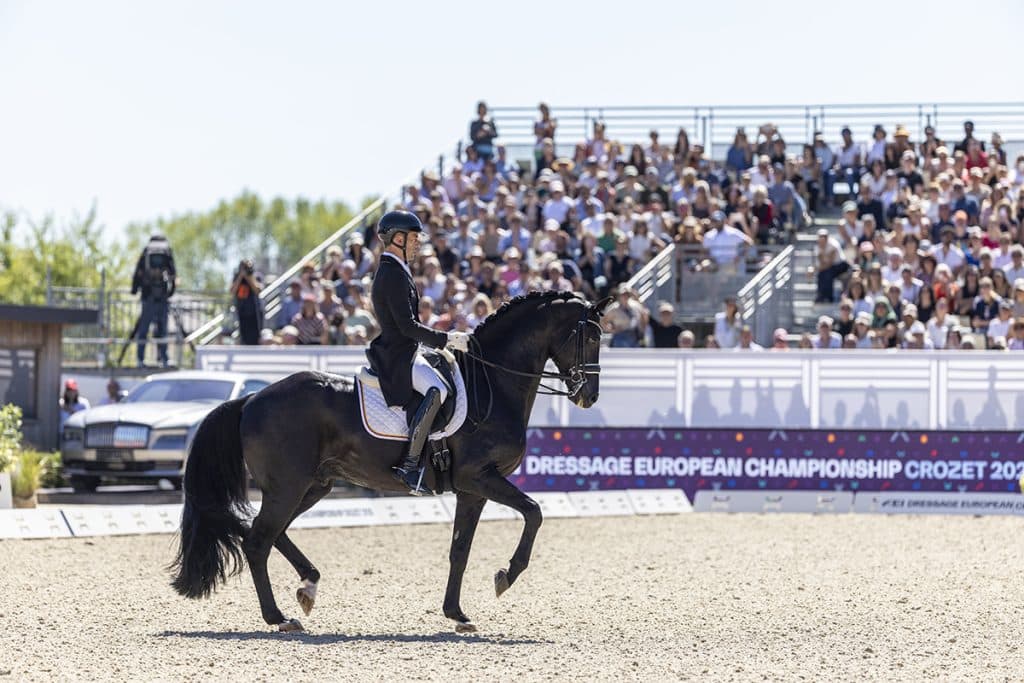
Justin Verboomen and Zonik Plus competing at the 2025 FEI Dressage European Championships. Image by FEI.
At Grand Prix level, the demands are enormous. Piaffe, passage, pirouettes, tempi changes and the transitions between them require extraordinary strength, coordination and mental concentration. In the past, the Grand Prix test could sometimes appear to be one continuous display of power and expression. Apart from the extended walk, there were relatively few opportunities for the horse to demonstrate genuine relaxation within the test.
And even in the walk, tension could often be evident after the demands of highly collected work.
This is where the introduction of a stretching circle in the new Grand Prix test becomes so interesting. At first glance, a 20-metre circle in trot, allowing the horse to stretch forwards and downwards, might seem an extraordinarily simple exercise to introduce at the highest level of the sport.
But I would suggest that it could become one of the most revealing movements in the entire test. It is not simply a matter of giving the reins and allowing the horse to lower its head. It is a test of the entire training process.
Can a horse move from the highly collected, expressive and engaged work of Grand Prix into a genuinely relaxed, open and swinging trot?
Can it maintain the rhythm, balance and confidence of its stride without the rider having to hold everything together?
Can the horse stretch through the neck, from the withers towards the poll, forwards and downwards, while remaining soft in the contact and supple through the back?
And perhaps most importantly, can the rider then take up the reins and return to collection without resistance, tension or a loss of confidence?
There is an enormous amount to be seen in one circle.
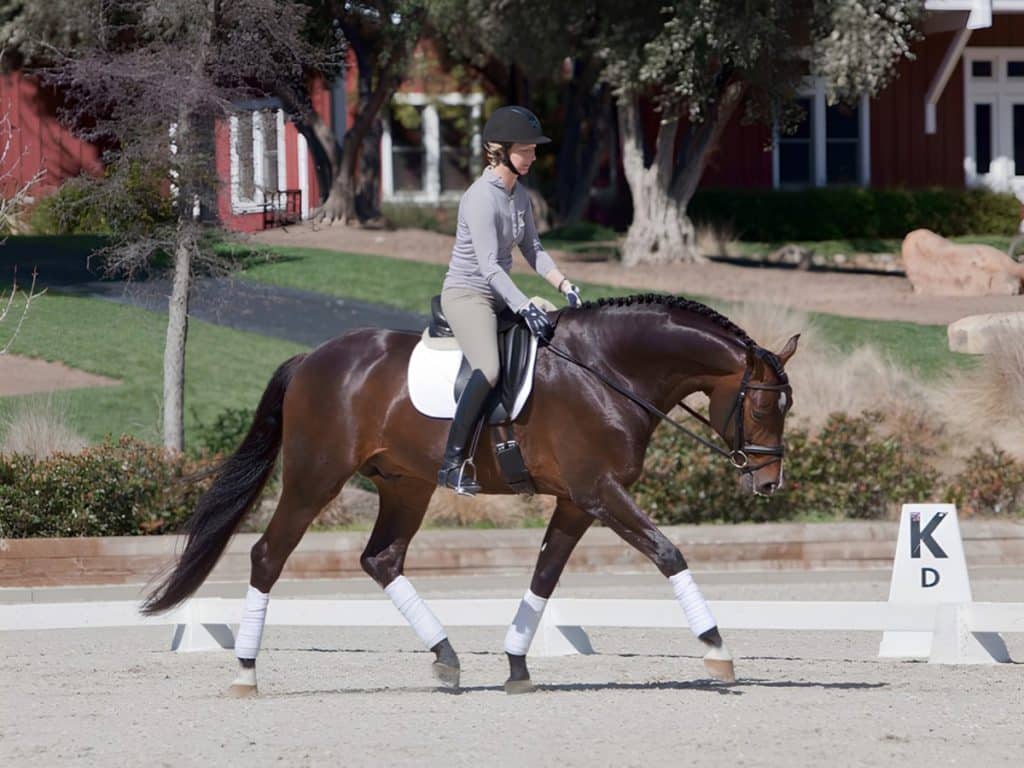
Sabine Schut-Kery with Sanceo as a young horse showing a stretchy trot; Sanceo went on to become a very successful Grand Prix horse and competed at the 2020 Olympic Games in Tokyo. Image supplied.
SITTING OR RISING TROT CHOICE
The FEI has given this movement a coefficient of 2, which demonstrates the importance now being placed on these fundamental qualities. The rider has the option of performing the movement in either sitting or rising trot. It will be fascinating to see which option riders prefer.
To me, rising trot would seem the most logical choice. From the horse’s earliest education, rising trot is associated with a freer, more open way of going. It allows the back to swing, the neck to lengthen and the horse to move without the same degree of collection and engagement demanded in sitting trot. It is almost a return to the basic principles of training.
Imagine the horse coming from highly collected trot, with the rider sitting and encouraging maximum engagement and expression, and then moving immediately into rising trot. The horse recognises the change. It takes a breath. The back softens, the neck reaches forwards and downwards, and the stride becomes open, fluent and relaxed.
Yet the rhythm must remain absolutely consistent. The horse must not fall onto the forehand, run, lose balance or change its tempo. The rider must demonstrate that the horse is truly carrying itself. Then, towards the completion of the circle, the rider retakes the reins, returns to sitting trot and asks the horse to come back into a collected frame.
Without resistance.
Without anxiety.
Without the need to manufacture the outline or compress the stride through the hand.
What a wonderful demonstration of correct training that would be.
Of course, rising trot is not necessarily the answer for every horse. Some combinations may show a more fluent and harmonious stretch in sitting trot. The important point is not which option is chosen, but the quality of the transition between collection and relaxation.
The stretching circle also provides judges with an opportunity to assess several essential qualities that can sometimes be disguised by the brilliance of the Grand Prix movements. They can observe the genuine balance of the horse, the natural rhythm and tempo of the trot, the elasticity of the back, the acceptance of the bridle and the willingness to follow the rider’s hand into a longer frame.
They can assess whether the horse stretches through its entire topline or simply drops its head and neck. They can see whether the contact remains soft and consistent and whether the horse can return to a shorter frame through correct engagement rather than restriction.
THE HORSE’S ATTITUDE
Above all, they can see the horse’s attitude.
Is it confident?
Is it relaxed?
Does it trust the rider?
Is there a willingness to respond immediately to the aids without anticipation or tension?
And is the horse truly adjustable, both mentally and physically?
These are the qualities that should underpin every level of dressage, from the earliest young horse classes through to Grand Prix.
There is also the interesting question of positive tension. A Grand Prix horse must have energy, enthusiasm, expression and a willingness to perform. Without that athletic desire, the brilliance of piaffe, passage and the collected movements would be impossible.
But positive energy must never become negative tension. The real art of training is developing a horse that can produce extraordinary expression and collection while remaining mentally relaxed and physically supple. The ability to move from that heightened athletic state into a completely relaxed and open trot, and then immediately return to collected work, is an exceptional demonstration of training.
It will not be easy. Indeed, I suspect some of the most spectacular horses may find this seemingly simple exercise surprisingly difficult.
It is one thing to produce enormous expression when the horse is highly engaged and focused on collection. It is quite another to demonstrate that the same horse can instantly relax, stretch and maintain complete confidence in the rider’s aids.
The stretching circle will expose any weakness in balance, acceptance of the contact or genuine suppleness. Equally, it will reward the beautifully trained horse whose collection has been developed progressively and correctly.
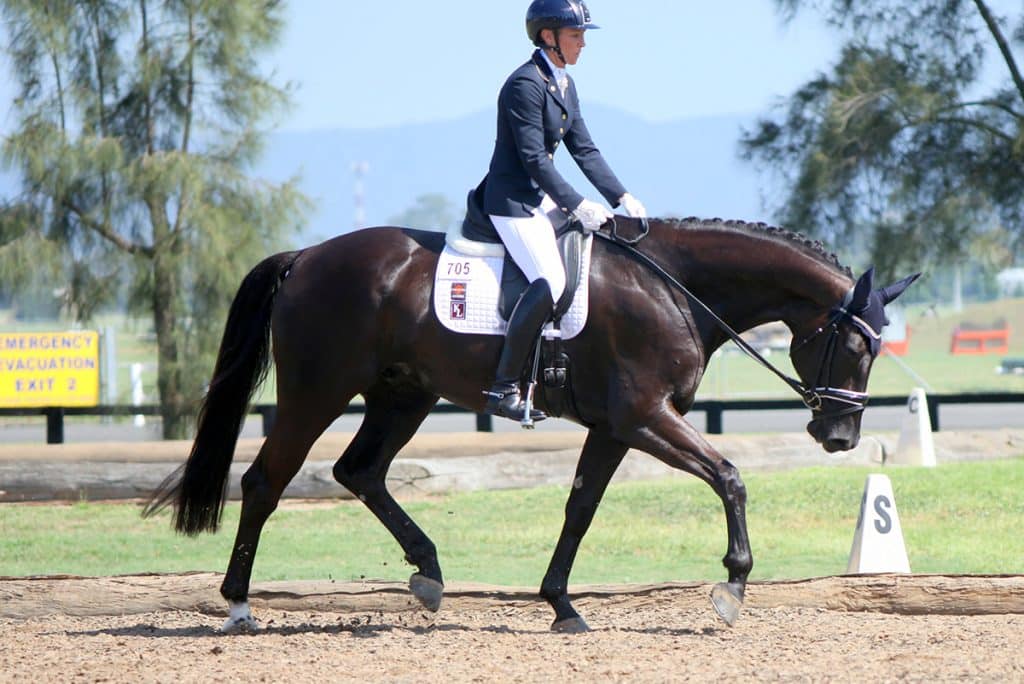
The stretchy trot is already part of lower-level tests, but will now be included in the FEI Grand Prix. Image by Roger Fitzhardinge.
“It is a very positive
sign of the times.”
MESSAGE TO BREEDERS, TRAINERS, RIDERS
The changes to the international tests also send an important message to breeders, trainers and riders. If judges consistently reward harmony, natural movement, adjustability and genuine collection, then these are the qualities that will increasingly influence the horses we breed, the horses we buy and the way we train them.
It is a progression that begins with the young horse and continues all the way to the highest level of international competition. The best dressage has always been about making the difficult appear effortless.
The new stretching circle may well remind us that the ultimate demonstration of training is not simply how much power and expression a horse can produce, but how easily that power can be softened, redirected and brought back again.
It will be fascinating to see how riders, trainers and judges respond to this new requirement. For me, it is a very positive sign of the times. One circle. One seemingly simple movement. Yet an extraordinary opportunity to see the quality of the training, the confidence of the horse and the harmony of the partnership. And surely that is what dressage should be all about. EQ
Related articles

For generations the double bridle has reigned supreme in dressage. Its delicate balance of curb and bridoon bits was seen as the mark of an educated horse and a refined rider – the final step in the classical training ladder. But times are changing, and so too is the tack.

Straight lines, accuracy to markers and true corners set combinations apart. Sit back and watch any dressage test and what often sets one combination a cut above another is the precision with which they negotiate the lines each test prescribes.