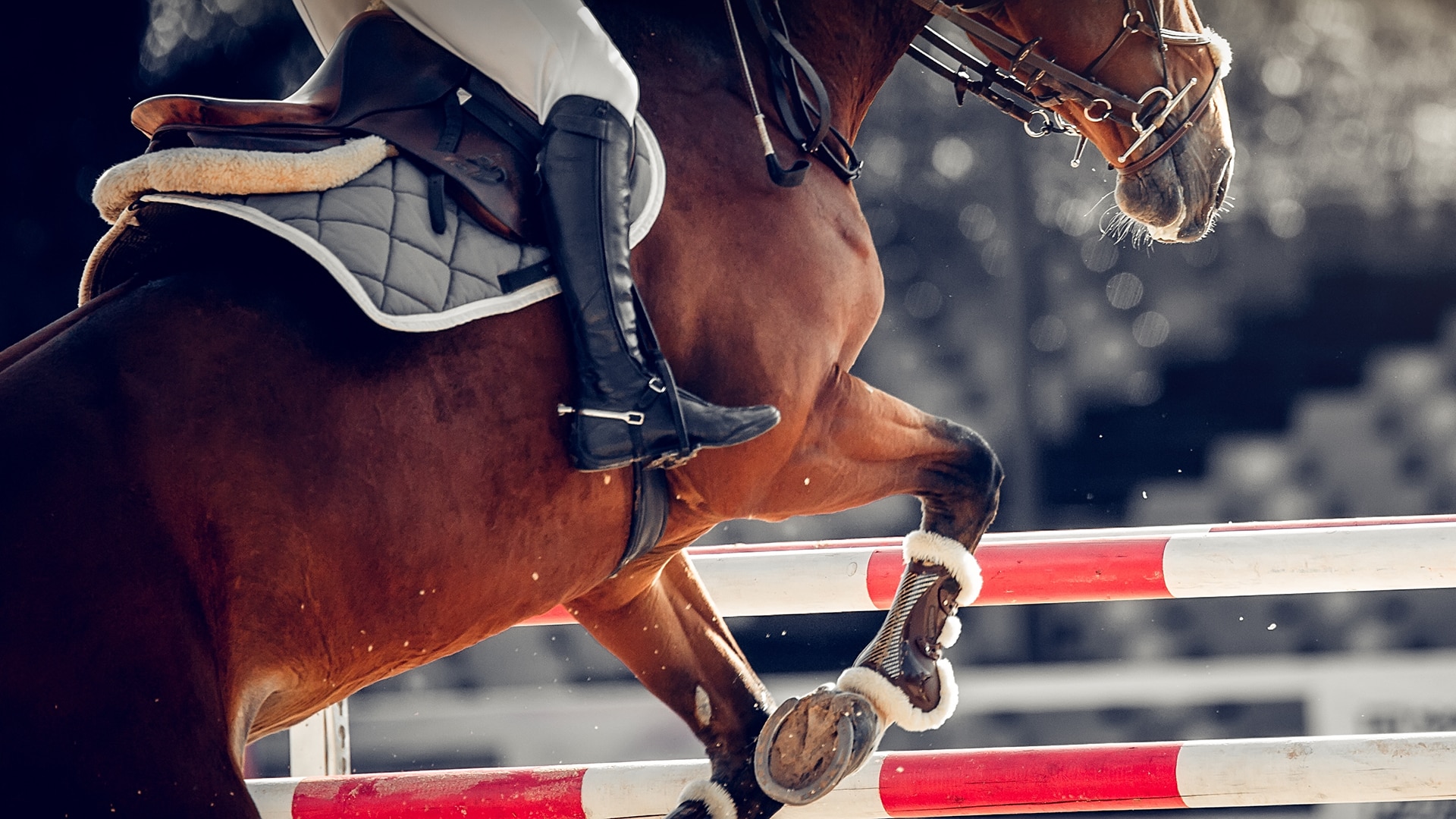
When something goes wrong while riding, how do you respond?


You hit Fence 4 wrong. The rail clatters against the cup, or your horse chips awkwardly, throwing your upper body forward and sending a sudden spike of adrenaline straight through your body. Or perhaps you are in the dressage arena, and a spook during a lateral movement turns a fluid shoulder-in into a hollow, tense scramble across the centreline. How do you respond?
In equestrian sport, an error never stays isolated inside your own head. Unlike a tennis player who can pause between points or a runner who stays in a dedicated lane, you are mounted on a sensitive and large prey animal who reads every micro-contraction in your body. The instant you realise you made a mistake, your body reacts on instinct. Your jaw clenches, your hands grip the reins, your legs lock against the saddle, and your lungs freeze. To a horse, that sudden physical lockdown signals danger.
The split-second reaction after a bad jump or a broken stride is what separates an amateur round from a professional performance. Elite competitors make mistakes too, but they have developed an automatic method for recovering before the next stride.
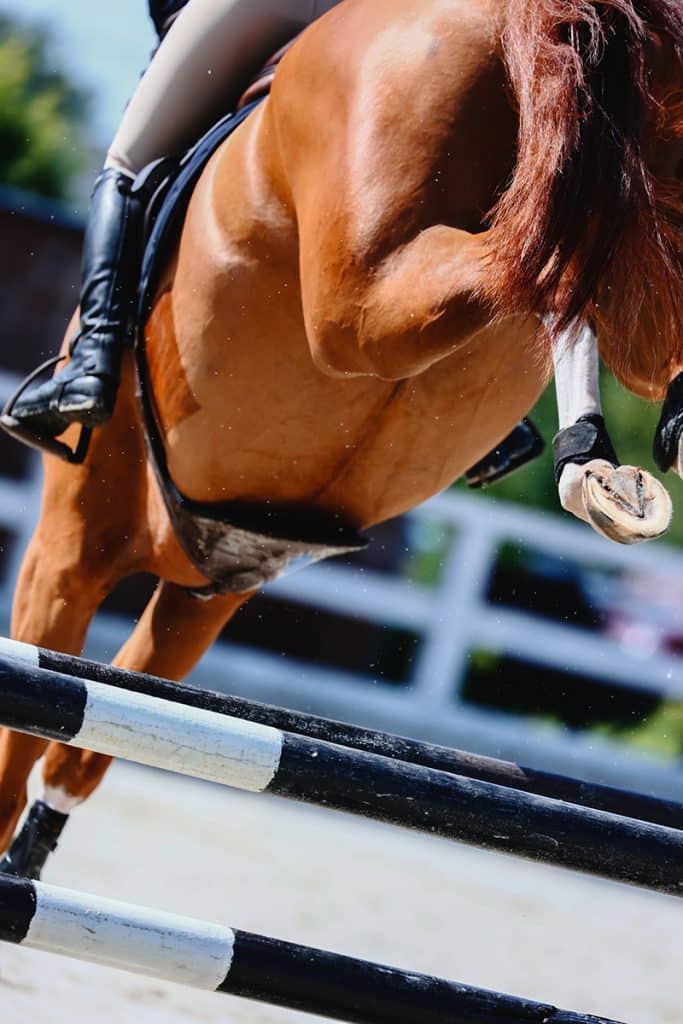
The split-second reaction after a bad jump or a broken stride is what separates an amateur round from a professional performance.
THE PROBLEM WITH LOOKING BACKWARD
When something goes wrong in the arena, human instinct makes us want to look backward. The analytical part of the brain wants to troubleshoot right away. You ask yourself why you pulled on the reins, why you failed to push forward to that distance, or how you managed to miss a simple lead change.
That kind of technical analysis belongs back at the float while you untack and cool your horse down. In the middle of a course, analysing your faults as they happen is at best unhelpful and at worst, dangerous. Riding while looking in your mental rear-view mirror leaves your horse directionless right when they need you the most. They need you present in the moment, focused on recovery and the next task.
Horses don’t process mistakes the way we do. For us, a knocked rail carries meaning far beyond the moment – a feeling of personal failure, fear of missing the final, or anxiety over what spectators think. For the horse, that fallen rail or awkward stride doesn’t carry the same emotional weight and is forgotten in the very next second. When a rider stays stuck on a mistake three strides back, the horse senses a loss of leadership and direction. Combined with the physical tension we hold when dwelling on an error, secondary problems quickly follow, like a horse rushing, backing off or losing impulsion. This is how a single technical mistake snowballs into an emotional and performance breakdown across the rest of the course.
MENTAL TRAINING BEFORE YOU MOUNT UP
Most riders spend their mental preparation imagining an ideal round. They picture hitting every distance perfectly, riding every corner with correct bend, and finishing on a clean score. While positive visualisation builds confidence, relying on it exclusively leaves you unprepared for real competition (and real horses!). When an unexpected error occurs, your brain treats it as a threat and a failure, triggering panic.
As a Performance Psychologist who works with top riders, I recommend a different mental technique called “contingency rehearsal”. Brain research shows that when you vividly picture a physical action, your brain activates the same neural patterns it uses when you execute that movement in real life. Sports scientists refer to this concept as motor imagery. Your nervous system learns from mental repetitions just as it does from physical practise in the saddle.
In contingency visualisation, riders mentally rehearse both clean lines and their response to any errors. You deliberately imagine making a technical mistake during your ride. You picture missing a distance, feeling the awkward landing, and – the most important part – immediately executing your recovery routine. You picture a sudden spook at the corner marker, followed by your instant physical release and re-established leg aid.
By working through these scenarios off-horse, you build a clear mental pathway for handling any problems. When a rail falls or a distance disappears in the ring, your brain does not freeze. It recognises the situation and triggers the recovery process right away because you have already ridden through the solution – and successfully recovered from it – 50 times in your mind.

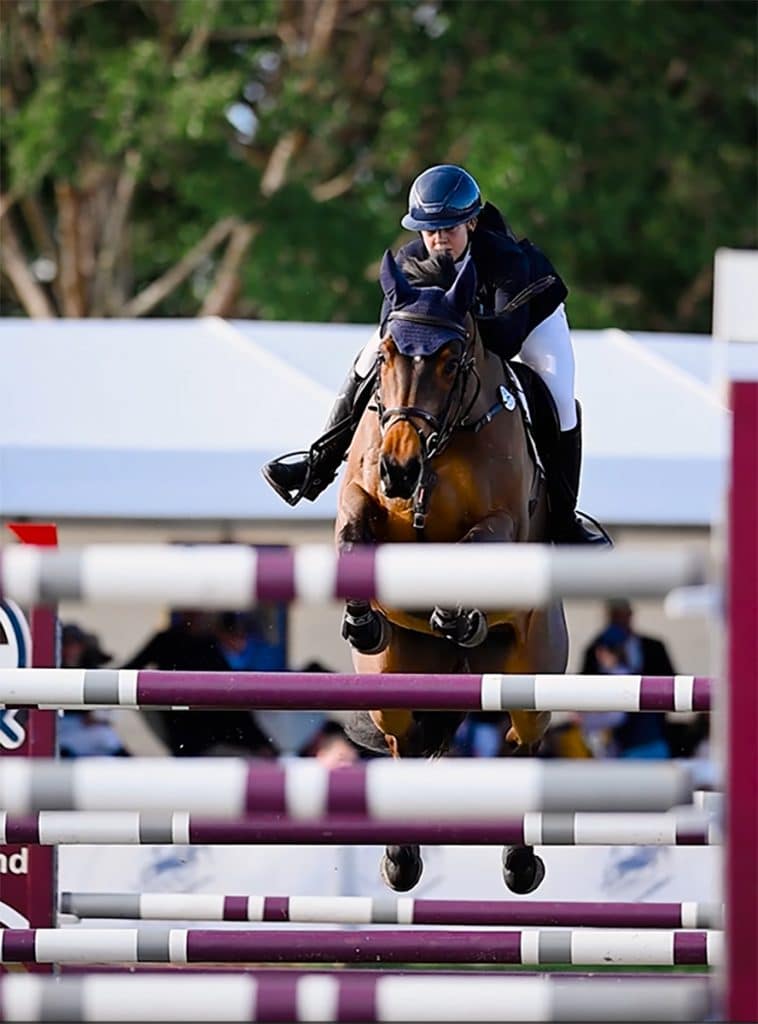
In the showjumping arena, you usually have only a few strides or a micro-second between movements. Pictured here is Madeline Sinderberry and Camie Z about to nail the treble to win the Caboolture World Cup Qualifier at the 2026 Peachester Lodge Festival of Showjumping. Image by Click Capture.
THE THREE-STEP RECOVERY SEQUENCE
A mid-ride reset needs to happen fast. You usually have only a few strides in a turn or a micro-second between movements to get yourself and your horse back on track. A successful mid-ride reset relies on three distinct actions: physical release, visual refocusing, and a simple verbal cue.
1. Release physical tension through your breath.
The moment an error happens, let out a deep, audible exhale through your mouth. Holding your breath tells your horse that something is wrong. A long exhale tells your horse that the situation is safe. As you release your breath, drop your shoulders down, and let your seat soften into the saddle.
2. Lift your eyes to a new target.
When riders make a mistake, they almost always look down. They stare at the horse’s neck, look back at where the mistake just occurred, or gaze down at the dirt. Looking down drops your head, pulls your balance forward, and restricts your horse’s movement. Learn to force your eyes up immediately. Look across the turn to the centre of the next obstacle or toward the next marker on the arena wall. Raising your vision rights your balance and physically directs your horse toward the next task.
3. Use a single cue word.
Internal arguments consume the mental energy you need to focus on the task at hand, that is, recovering and continuing the performance. Saying “I can’t believe I missed that” leaves no room for quick recovery. Replace that inner self-talk with one simple, action-oriented word. Choose a reset word before you enter the ring, such as “Rhythm,” “Forward,” “Soft,” or “Next.” Saying this word, either out loud or quietly in your head, cuts off the cycle of self-blame and instructs your mind to focus on what comes next in your performance.
BUILDING LONG-TERM RESILIENCE
Developing a quick reset is a skill that requires practise, just like rising on the correct diagonal or keeping your heels down. You can practise this routine during everyday training sessions at home. When your horse takes a clumsy stride or balks in your warm-up, avoid stopping to complain or shake your head. Use that moment to practise how you plan to perform – exhale, lift your eyes, speak your cue word – and ride forward to the next task.
That said, learning to reset under pressure looks different for every rider. We each carry a unique internal script into the ring, and the specific thoughts or emotions that surface after a mistake are deeply personal. What causes one rider to freeze might make another ride with frustration, and we all have unique triggers that send us down that “oh no” spiral. Untangling those automatic reactions usually takes consistent practice, as well as guidance from someone who understands the physical reality of the saddle as much as the psychology behind performance.
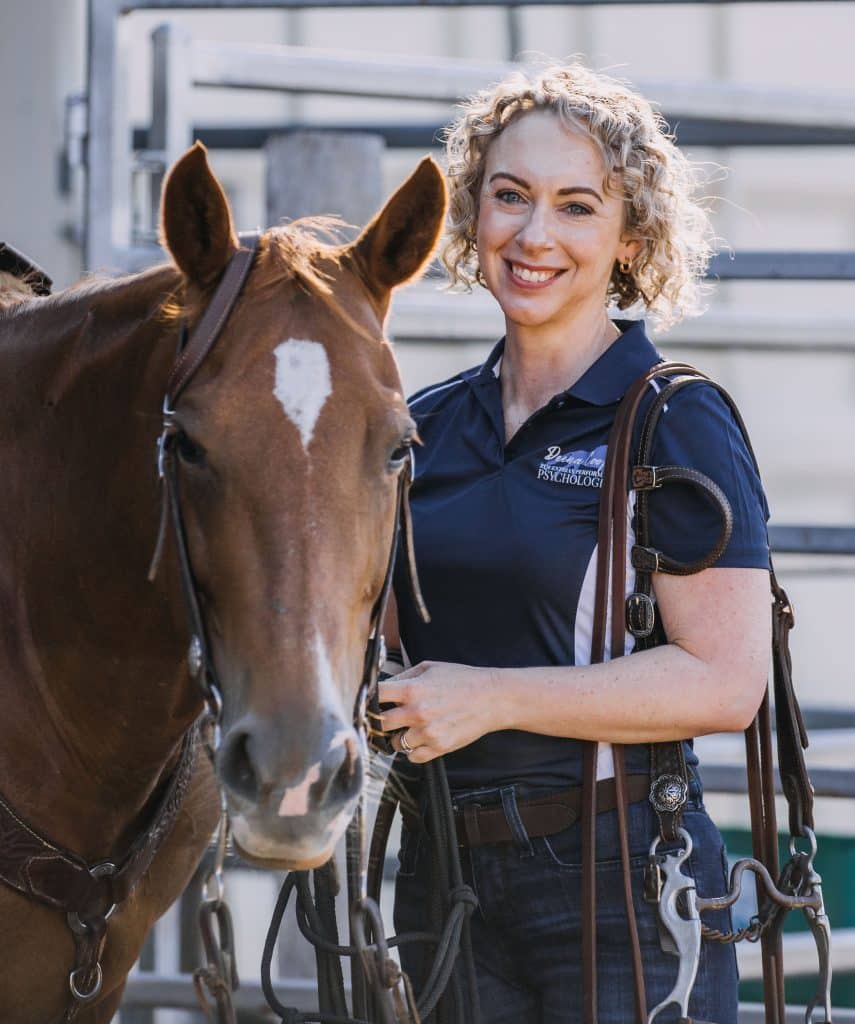
Deena Cooper is a registered Performance and Clinical Psychologist (AHPRA) with a unique edge: she is an active competitive rider. Image supplied.
Untangling those mental blocks and seeing riders rebuild their confidence in the saddle is what I love most about my work. When you gain control over your internal reactions, you clear the way for a true partnership with your horse and reach what you’re genuinely capable of as a rider.
Errors will always be part of riding. Mental strength is learning how to recover quickly instead of hoping for perfection. When you master the habit of a rapid reset, an error stops being a crisis and becomes just another stride in your ride.
“When you master the
habit of a rapid reset, an
error stops being a crisis.”
ABOUT THE AUTHOR
Deena Cooper is a registered Performance and Clinical Psychologist (AHPRA) with a unique edge: she is an active competitive rider who understands the saddle as well as she understands the science. Having navigated her own path from performance anxiety to confidence, Deena combines personal experience with evidence-based psychological strategies to help riders of all disciplines. She focuses on helping equestrians conquer nerves, recover confidence after setbacks, and build the “mental muscle” required for peak performance. Based in Australia, Deena works with riders via Telehealth, offering 1:1 coaching, in-person and online masterclasses designed to turn anxiety into your competitive advantage. EQ
Website: www.deenacooper.com.au
Follow: @deenacooperpsych
Related articles

In the equestrian world, we wear our bruises like badges of honour. There is an unspoken rule that if you fall, you must immediately dust yourself off and get back on; otherwise, "the fear will set in." As a Performance Psychologist, I’m here to tell you that this "grit-at-all-costs" mentality can sometimes be the very thing that keeps riders stuck in a cycle of anxiety.

Equestrian performance psychologist Deena Cooper answers a reader's sports psychology question: “I never have trouble running through a dressage test at home, but when I enter the competition arena my mind goes blank, and I struggle to remember the test. What can I do to overcome this?”