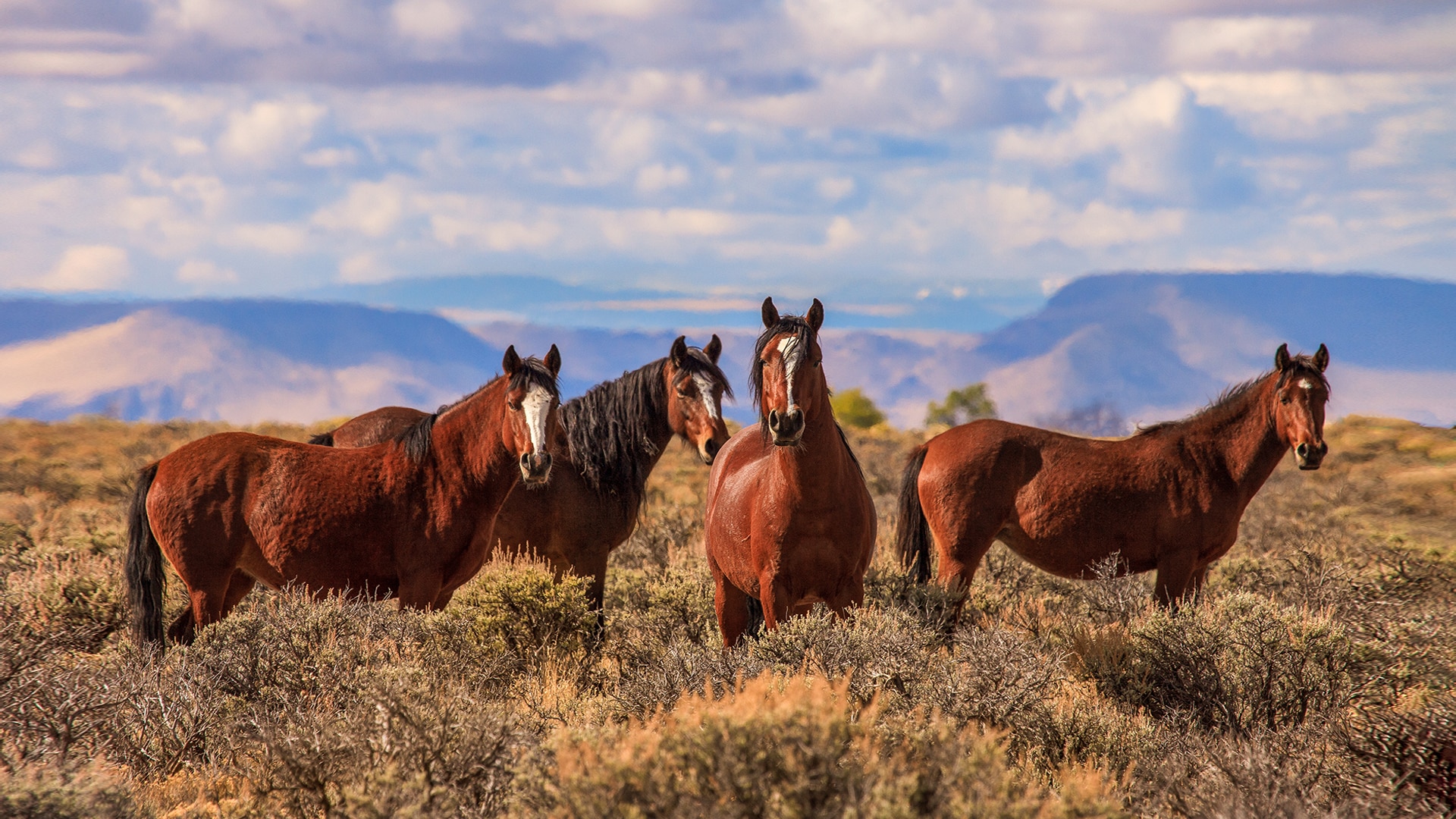
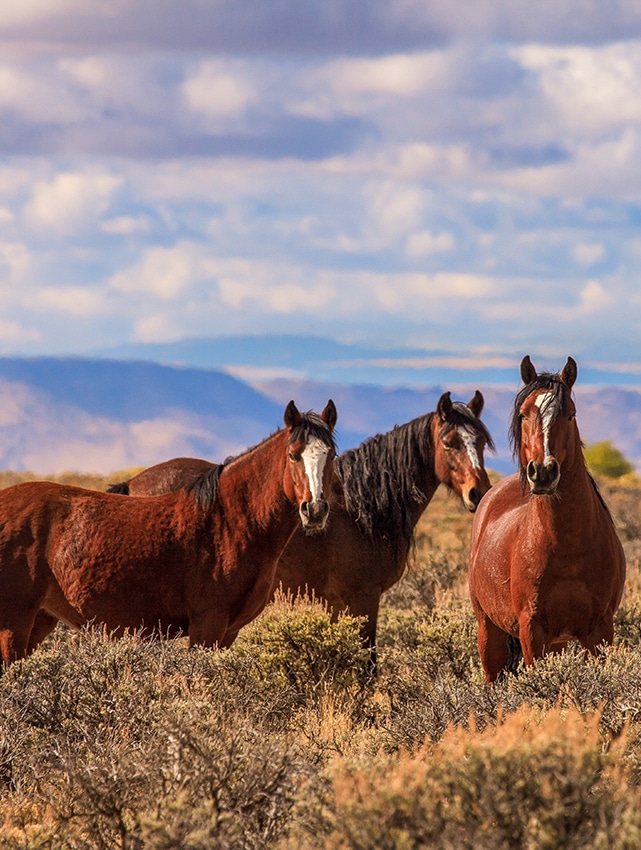
A Mustang is a free-roaming, feral horse found in the western plains of North America, originating from stock brought to the Americas by the Spanish conquistadors in the late 1400s.


In so many ways, this documentary on America’s Mustangs echoes the current Kosciusko carnage involving our Brumbies. It parallels the problems of huge numbers of horses living in the wild and finding humane solutions to control over-population.
‘THE MUSTANGS – AMERICA’S WILD HORSES’, 2021
Executive producers: Robert Redford, Patti Scialfa Springsteen and Jessica Springsteen
Executive producers of this 90-minute documentary were Robert Redford, Patti Scialfa Springsteen and daughter and Olympic showjumper Jessica.
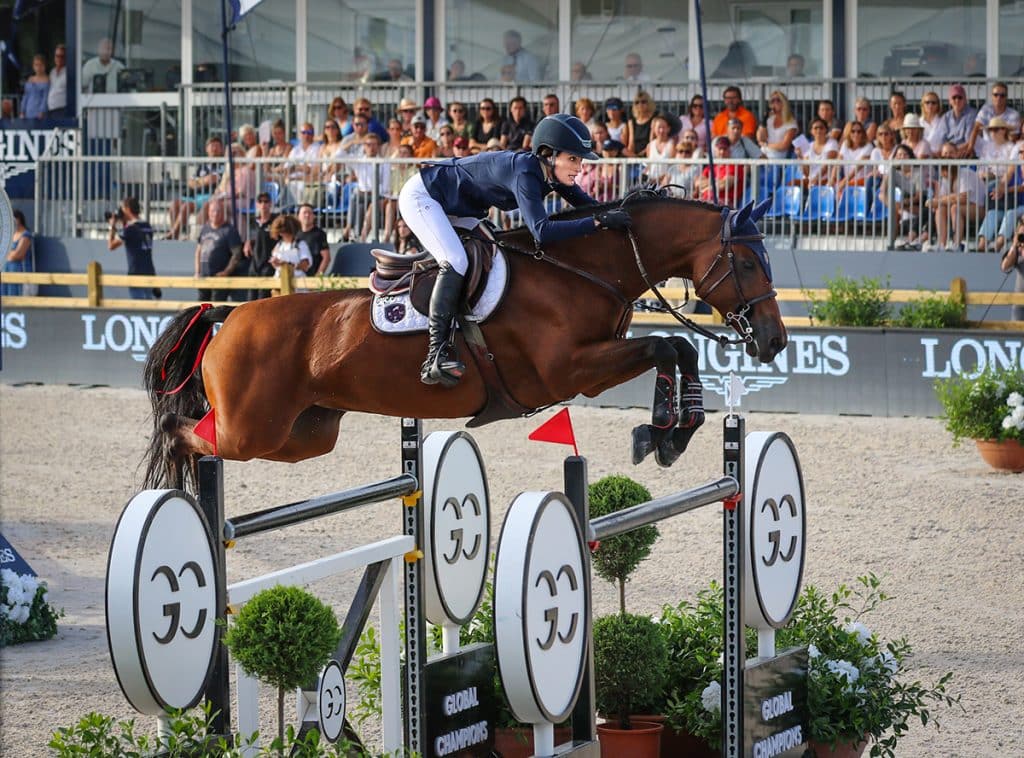
Jessica Springsteen is an elite-level showjumper as well as one of the executive producers for the 90-minute documentary. Image by Michelle Terlato Photography.
“America’s wild horses are fighting their last stand,” Redford had said. “Increasing competition for natural resources threatens our wilderness areas, our wild horses and other wildlife species. Horses are interwoven into the very fabric of what is America. What threatens them threatens us all.”
From 2014 until his death in 2025 the actor was on the board of Return to Freedom. This Californian organisation, begun in the mid-1990s, is dedicated to preserving the freedom, diversity and habitat of America’s wild horses and burros through sanctuary, education, advocacy and conservation. It’s based in Lompoc, Santa Barbara County.
The documentary, which won a raft of awards, tells the turbulent history of the Mustang, how it’s become entangled in controversy and bureaucracy and now has a questionable future. Described as a free-roaming horse of the western US, it descended from those brought to the Americas by the Spanish conquistadors in the late 1400s.
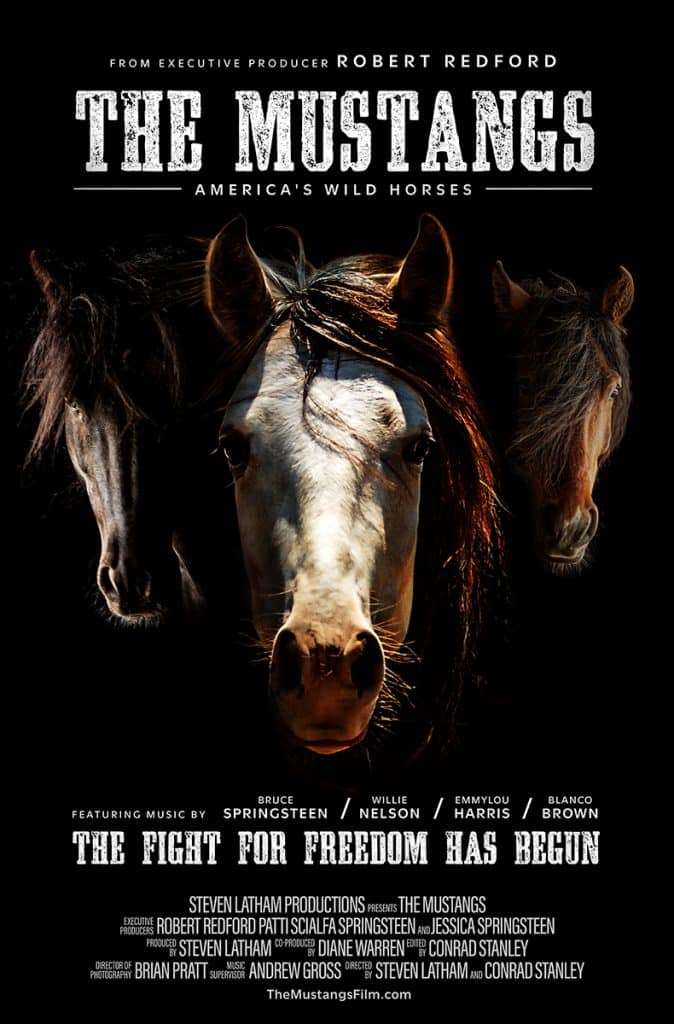
The film post for ‘The Mustangs’ (2012). Image supplied.
“They represent freedom, strength and resilience,” said co-director Steve Latham. “We take audiences on an exciting journey to understand the challenges the Mustang faces in a changing world.”
‘ALLURING ROMANTICISM’
As one reviewer noted the film’s initial sequences “are bathed in an alluring romanticism about the place occupied by the Mustangs in the country’s past and in its mythology”. Featured are paintings of Native Americans capturing and riding them; early photographs of cowboys; poster images of Buffalo Bill and The Lone Ranger radio shows – the masked hero rode Silver, a wild grey he rescued from a buffalo attack.
We also see a clip from the motion picture The Misfits where a tearful Marilyn Monroe is trying to stop Clark Gable from roping a wild horse. He is dragged across the desert sand and ends up a bloody mess.
The making of The Misfits, by the way, had its problems. Director John Huston, suffering from emphysema, would gamble all night at a casino, lose his money and sleep on set. Monroe was taking “uppers” and “downers” and sometimes didn’t turn up, and Gable, who didn’t understand the script, was unwell (he died shortly after filming finished). In the wide shot of the stallion dragging scene, Gable’s double is used. In the close-up action the camera was mounted on a pick-up truck, the star, who was heavily padded, grabbed the rope tied to the bumper and was pulled along by the truck until there was enough footage to splice into the long shot.
That feature was made in 1961, and we learn from the documentary it was screened at a time when the wild horse population was down to around 10,000. After World War 1, horses were no longer needed for transportation and, beginning in the 1920s, the US horse market collapsed. They were indiscriminately shot, rounded up by planes, their waterholes poisoned and thousands were slaughtered and packaged into dog food such as the brand Ken-L-Ration recommended by Rin Tin Tin on the radio!
Velma Bronn Johnston, a chain-smoking secretary from Reno, became sickened by the cruelty, the suffering and the mutilation. She wrote letters to local newspapers and politicians and encouraged children to speak up with her by writing to Washington DC. She became known as “Wild Horse Annie”, a voice for Mustangs across Nevada. In 1971, with the help of her young “pencil brigade”, she persuaded Congress to pass a law protecting wild horses and burros on public land.
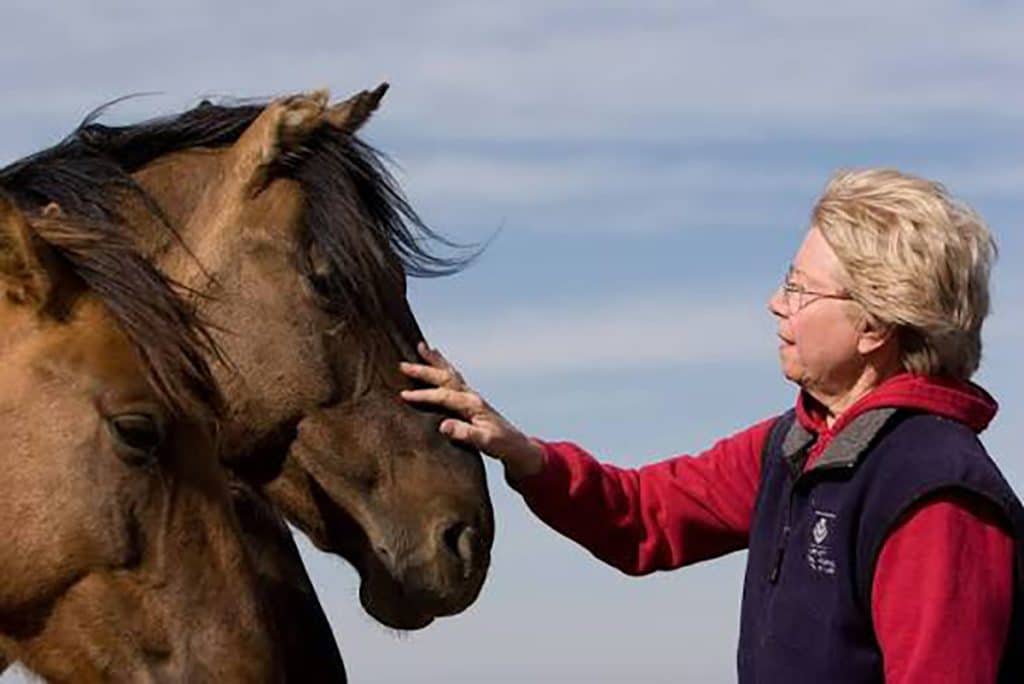
Velma Bronn Johnston, better known as “Wild Horse Annie”. Image supplied.
TRIVIA: In 1973 Velma Johnston appeared as herself in Running Wild, a feature starring Lloyd Bridges in which a photographer travels to Colorado and becomes involved in an effort to save a mob of wild horses.
Today there are more than 80,000 on public lands where eco systems are fragile and over 50,000 in Bureau of Land Management (BLM) corrals. Mustangs have no natural predators, and the population will double every four to five years. Eventually all natural resources will be consumed and exhausted and they will starve to death.
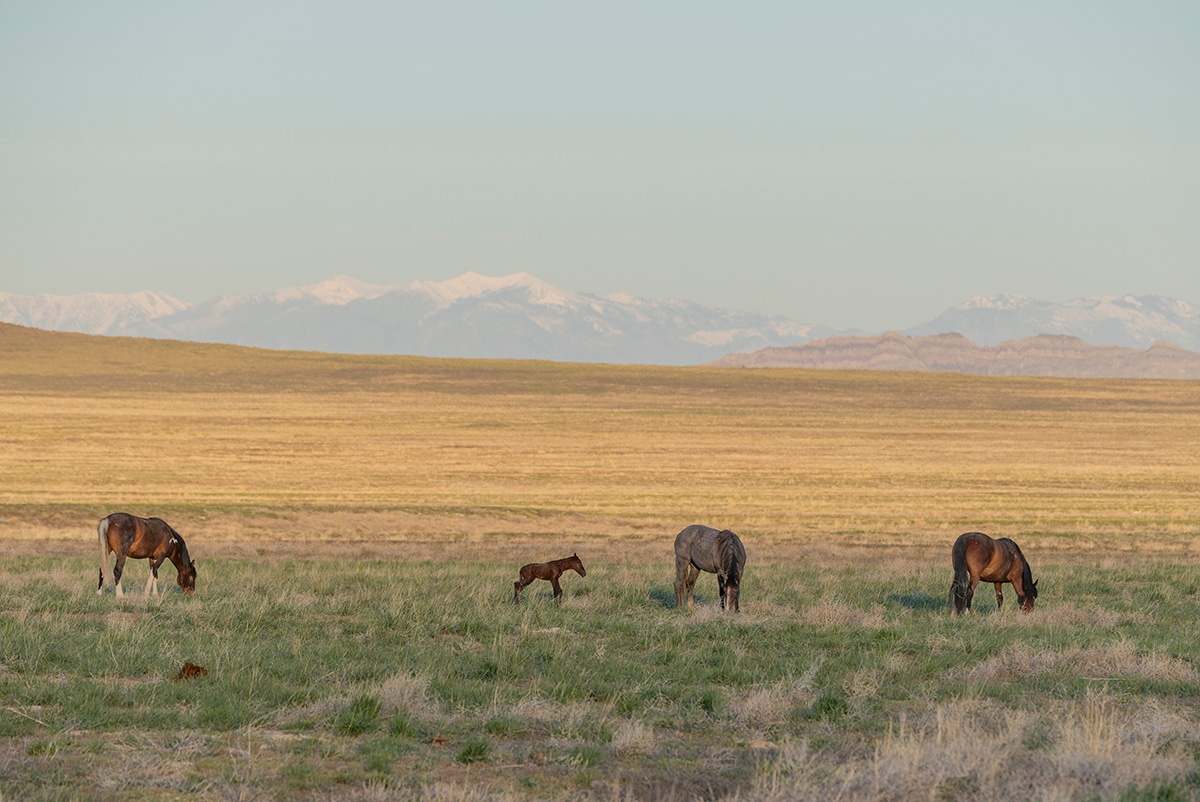
Today there are more than 80,000 Mustangs on public lands where eco systems are fragile and over 50,000 in Bureau of Land Management (BLM) corrals.
One solution to help reduce numbers is darting the horses with a vaccine inhibiting fertilisation. In the documentary we see teams of volunteers seeking out fillies and painlessly shooting them with dart guns from 12 metres away. This is highly challenging work requiring annual boosters, but is considered a more humane alternative to permanent removal from their habitat.
Researchers state that humane on-range management must be prioritised: “Healthy rangelands and thriving wild horse and burro populations are not opposing goals. With science-based planning, transparent monitoring, reasonable livestock grazing adjustments, habitat protection and proven fertility control, the BLM can reduce conflict while keeping more wild horses and burros on the range.”
OPERATION WILD HORSE
A satisfying element to this documentary is the section devoted to Operation Wild Horse in Bull Valley, Illinois, where military veterans and families experience the healing power of Mustangs. Founder Jim Welch talks about how these horses “look into your soul” and have the ability to rehabilitate those who are suicidal or suffering from PTSD.
As one of the veterans says: “They’ve been through what we have.”
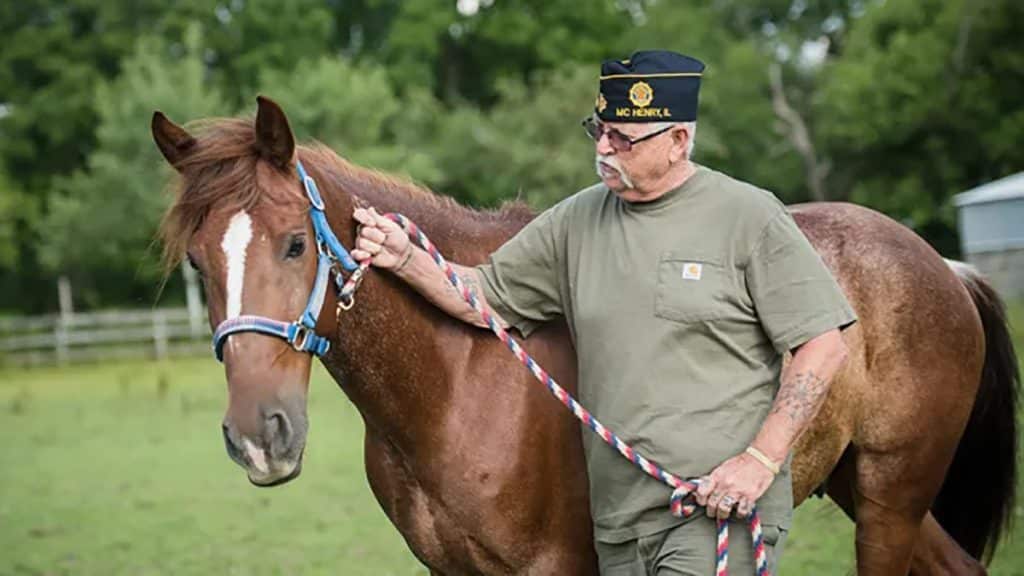
Operation Wild Horse in Bull Valley, Illinois, sees military veterans and families experience the healing power of Mustangs. Image supplied.
Reviews are varied. “For audiences who are already concerned with the preservation of wild horses the film will probably reassure them,” stated one reviewer. “Yet for others wishing to understand better the issues behind managing America’s wild horses, The Mustangs leaves more questions than answers.”
“The documentary offers sentiment over solution,” declared another critic. “The picture doesn’t pretend to have the answer,” said Equine America Magazine, “but it does introduce us to several people and organisations who are doing what they can to help preserve, protect and responsibly manage our wild horses on America’s public lands.”
Accompanying the footage is music from Bruce Springsteen (Chasin’ Wild Horses); Willy Nelson (Ride Me Back Home); and Emmylou Harris (Ballad of a Runaway Horse). EQ
It can be viewed on American PBS at no cost, and on Apple TV.
Next time in Horses & The Movies, ‘Autumn Stables’.
Related articles

The opening lines to Butch Cassidy and The Sundance Kid belie what ensues. “The horse is dead,” declares the salesman. “Meet the future mode of transportation.”

So many actors have big egos but little talent. Second-rate celebrities who are legends in their own minds. Not so Sam Neill – a fine actor, humanitarian and lover of animals.