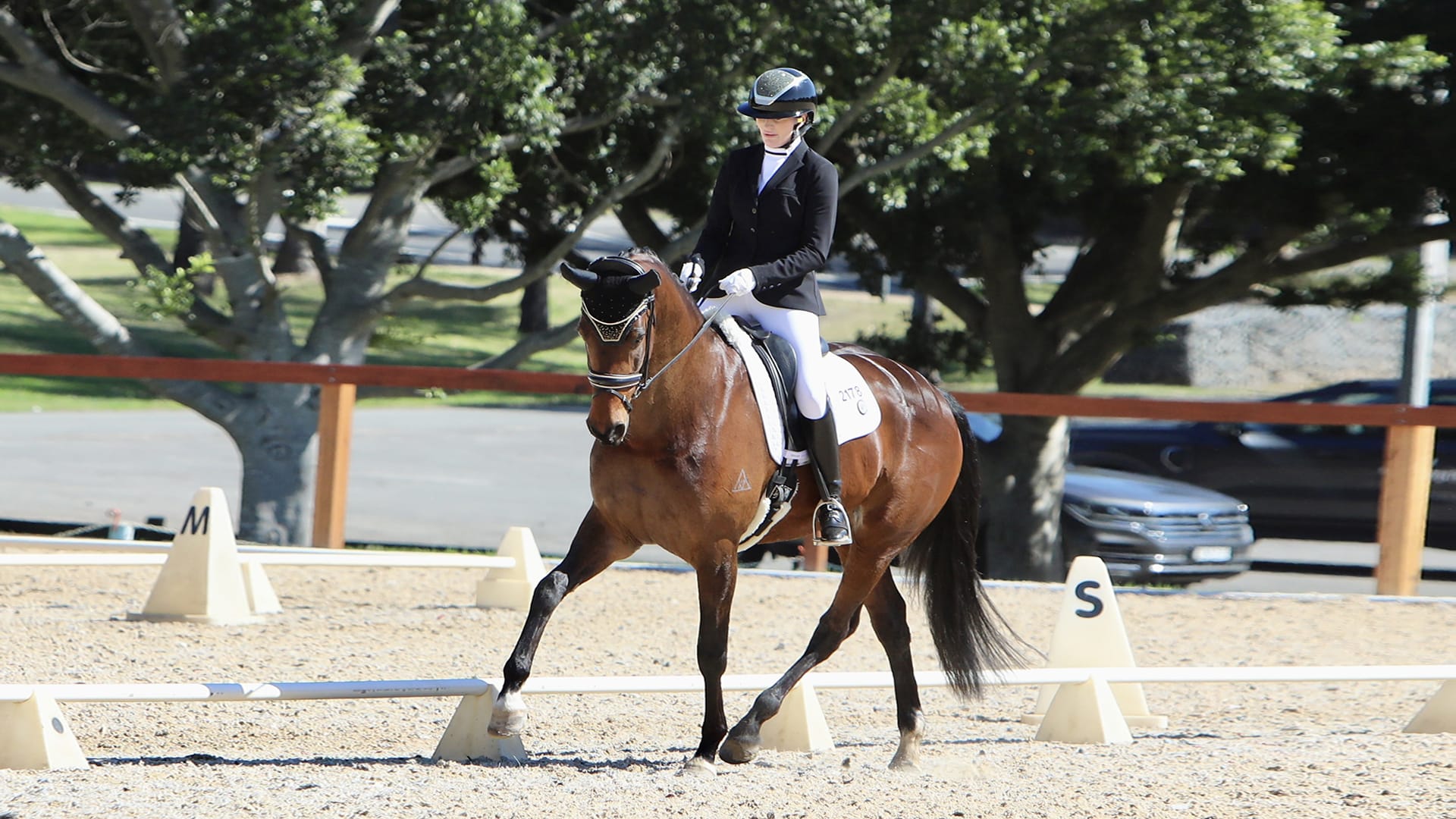
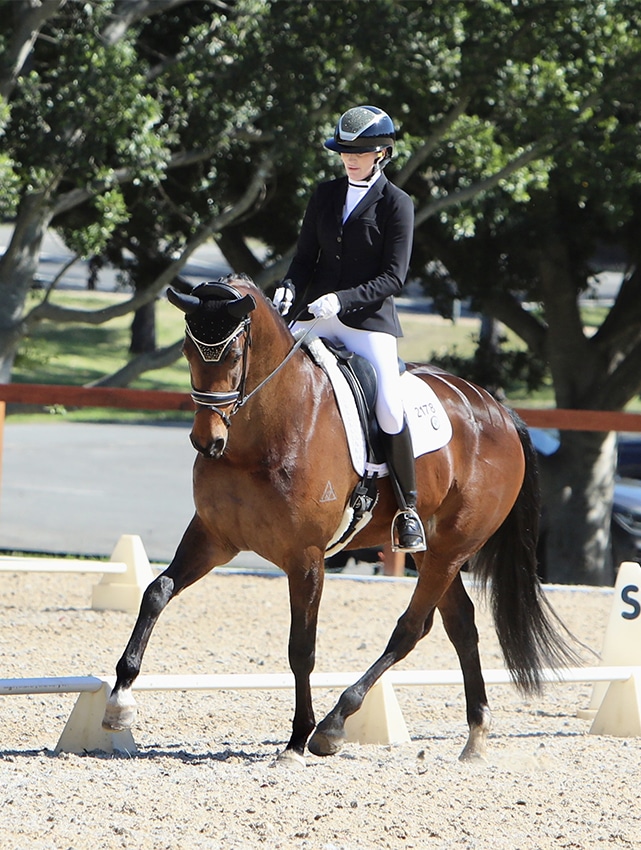
Competitors such as Emma Adams and Jazelle KP made the most of brand-new arena surfaces at the 2026 Regency Floats NSW State Dressage Championships. Image by Roger Fitzhardinge.


The major investment in new surfaces at the SIEC paid off big time at the 2026 NSW State Dressage Championships, providing arenas of a truly international standard that brought out the best in riders and horses alike.
The footing was consistent and a great improvement in the new Ebb & Flow arenas, giving riders every opportunity to produce their horses to their best. And Sydney turned on the weather for the Regency Floats NSW State Dressage Championships, with mild mornings developing into beautiful days in the mid-20s, with virtually no wind, providing ideal conditions for dressage.
There was such an excellent standard of horses and riding that at times it felt that the quality produced perhaps deserved even higher scores. There were some very exciting horses across the levels and plenty to look forward to for the future.
It was interesting to note, however, that quite a few of our top riders were missing. Brett Parbery, Katina Smith, Kaila Simms, Jayden Brown and Robert Harrisson Schmerglatt were among the notable absentees.
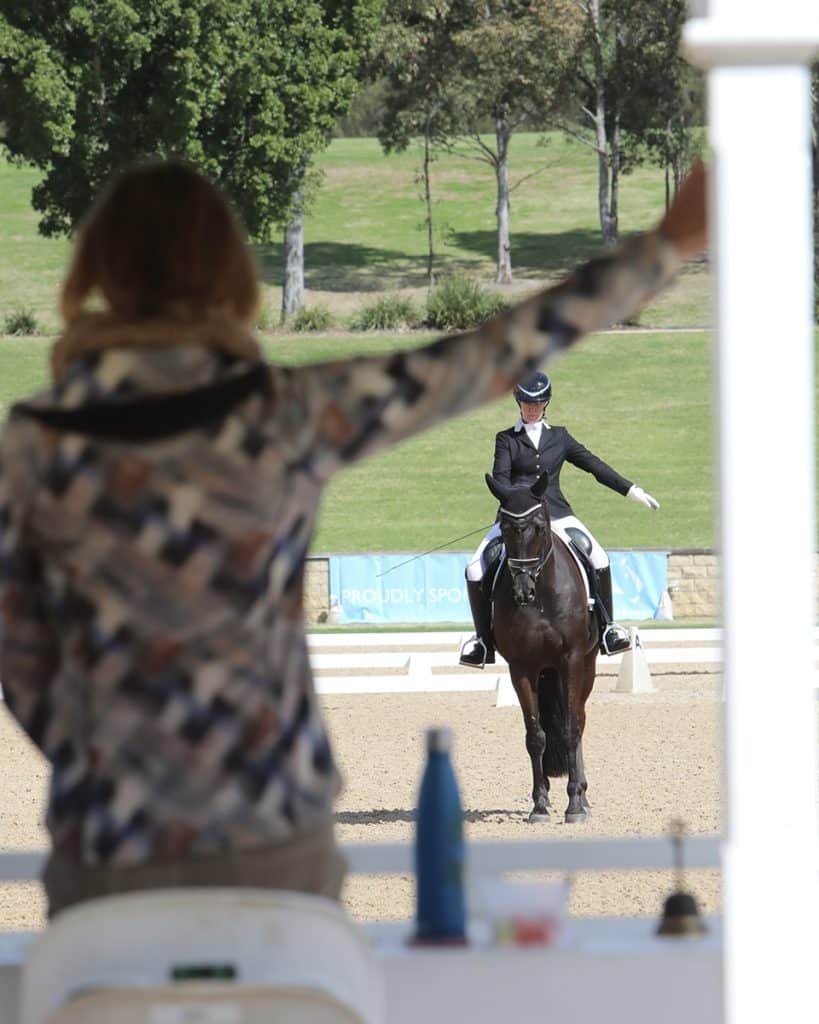
The new arena surfaces at Sydney International Equestrian Centre were appreciated by competitors. Image by Roger Fitzhardinge.
“There were some very
exciting horses across
the levels and plenty to look
forward to for the future.”
For many years riders have complained that the surfaces at SIEC were not of the standard required for major championships. Now, with millions of dollars spent on new surfaces providing considerable improvement, it was interesting that a number of leading riders still did not enter.
Of course, some were away experiencing and enjoying international dressage at the World Championships in Aachen. Nevertheless, for local competitions to run successfully and break even, it is important to fill the arenas with competitors.
Nonetheless, there were many classes offered: Open Championship classes, non-championship classes, Amateur Owner Rider, Para and other categories. In total there were 29 individual champions, making for an enormous program of competition, presentations, ribbons and prizes.
PRELIMINARY CHAMPION
Starting with the Assistance Dogs Australia Preliminary Open classes, it was Riley Alexander and the beautiful Valerio who shone, winning both tests. It was interesting, however, to look at some of the discrepancies between the judges’ marks. This is something often seen at Preliminary level, and it raises an interesting question: why?
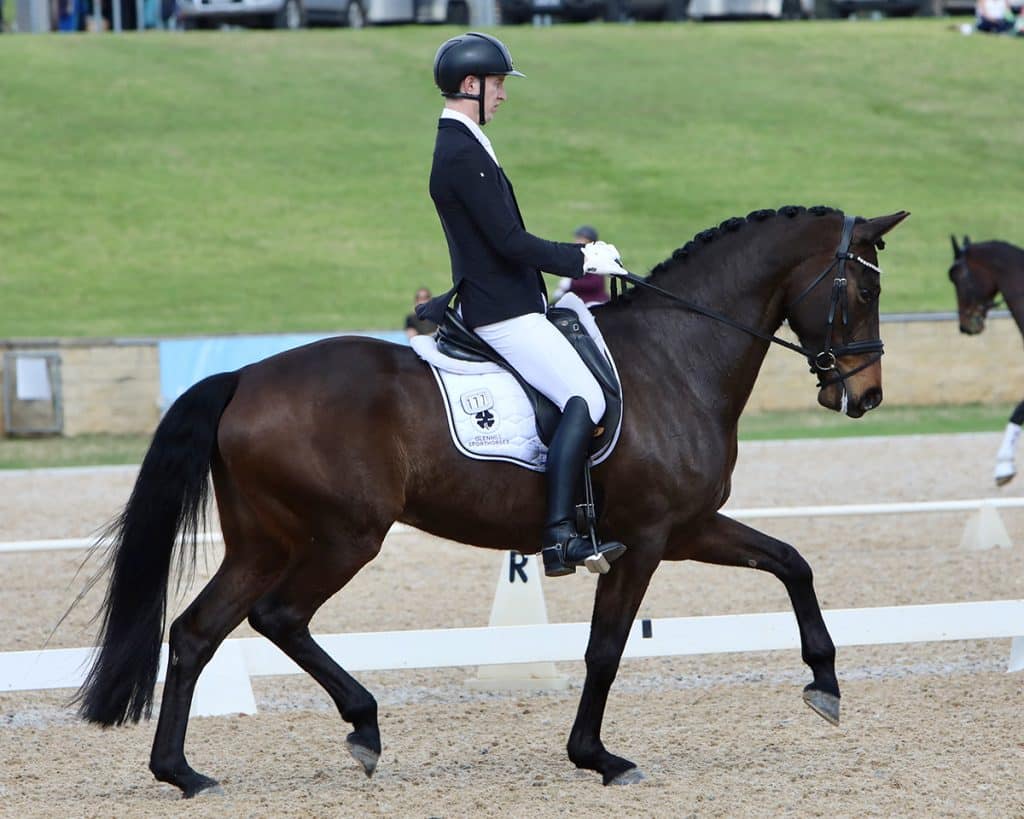
Riley Alexander and Valerio. Image by Roger Fitzhardinge.
There are so many facets to consider when judging a young, up-and-coming horse in its first competitions. Is the sport looking for an unenthusiastic, open-framed, close-to-the-ground-moving horse that performs the Preliminary test with absolute consistency? Or should judges reward the more sprightly, athletic and elastic-moving horse that perhaps shows the occasional glitch in consistency or contact but makes you think, Wow! That horse could go to Grand Prix?
It is an interesting thought.
Judging is subjective, and perhaps nowhere is this more evident than at Preliminary level, where there can be a vast variation in the conformation, type, movement and maturity of the horses presented.
Of course, there is the correct scale of training, but that scale must sometimes be evaluated while keeping in mind the temperament and athleticism of the individual horse. Is “relaxation”, for example, always interpreted the right way?
Perhaps a better description of what we want to see is a horse displaying a calm and concentrated attitude while showing positive expression within the paces. To show true expression there must surely be a degree of positive tension. Expression, enthusiasm and verve are never demonstrated through total relaxation.
Riley Alexander’s Valerio illustrated just how differently judges can sometimes view the same performance. In one test, the horse received 76.429% from one judge and 70.179% from the other, for an overall score of approximately 73.3%.
In the other test, Valerio again scored around 73.3% overall, with marks of approximately 72.50% and 73.33%, winning both Preliminary tests.
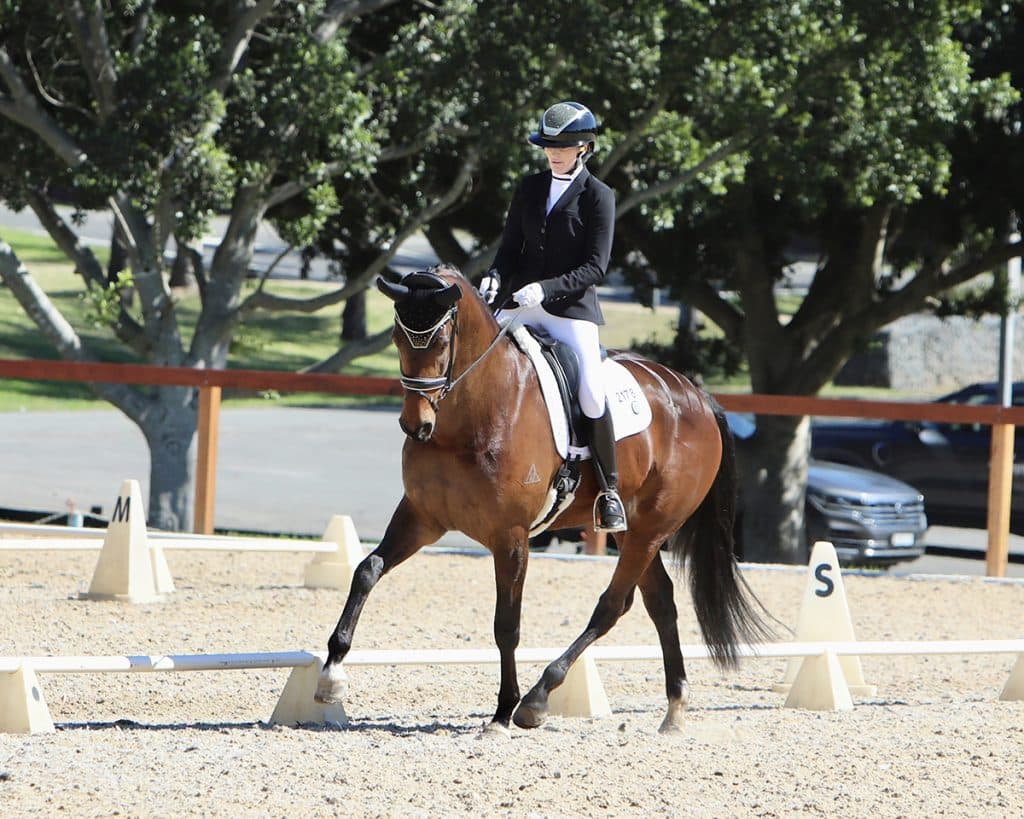
Another horse that really took the eye in this very strong field was Jazelle KP, ridden by Emma Adams. Emma and Jazelle KP scored 71.429%, with one judge awarding 74.107% and the other 68.750%. In the other Preliminary test, they scored 71.354%, including 75% from one judge, while the second judge awarded 67.708%.
That is a considerable difference of opinion over the same horse and the same performance.
Another horse to impress was EPH Finnian, ridden by Sydney Evans. Finnian was a completely different type — more of a Holsteiner-style horse; heavier set with substantial bone and power. A big-shouldered, elegant-moving horse with a lovely uphill tendency, Finnian was ridden by Sydney in a very empathetic way to gain a second and a third in these extremely competitive classes.
What made the Preliminary competition particularly fascinating was seeing three totally different types of horses at the top of the leaderboard.
Valerio was elegant, modern, elastic and athletic.
EPH Finnian was the bigger, heavier-set style of horse — perhaps not as immediately expressive, but correct, powerful and showing steadiness and calmness.
Jazelle KP, for Emma Adams, was smaller, elegant and beautifully conformed — the sort of horse that could probably walk into a hack class at a Royal Show and win. The presentation was immaculate, producing a smooth and flowing test.
Even the frames of the horses were quite different. Valerio appeared relatively advanced and well connected in the frame; Finnian was longer and flatter, showing great steadiness and calmness; while Jazelle KP presented something of a mixture of the two.
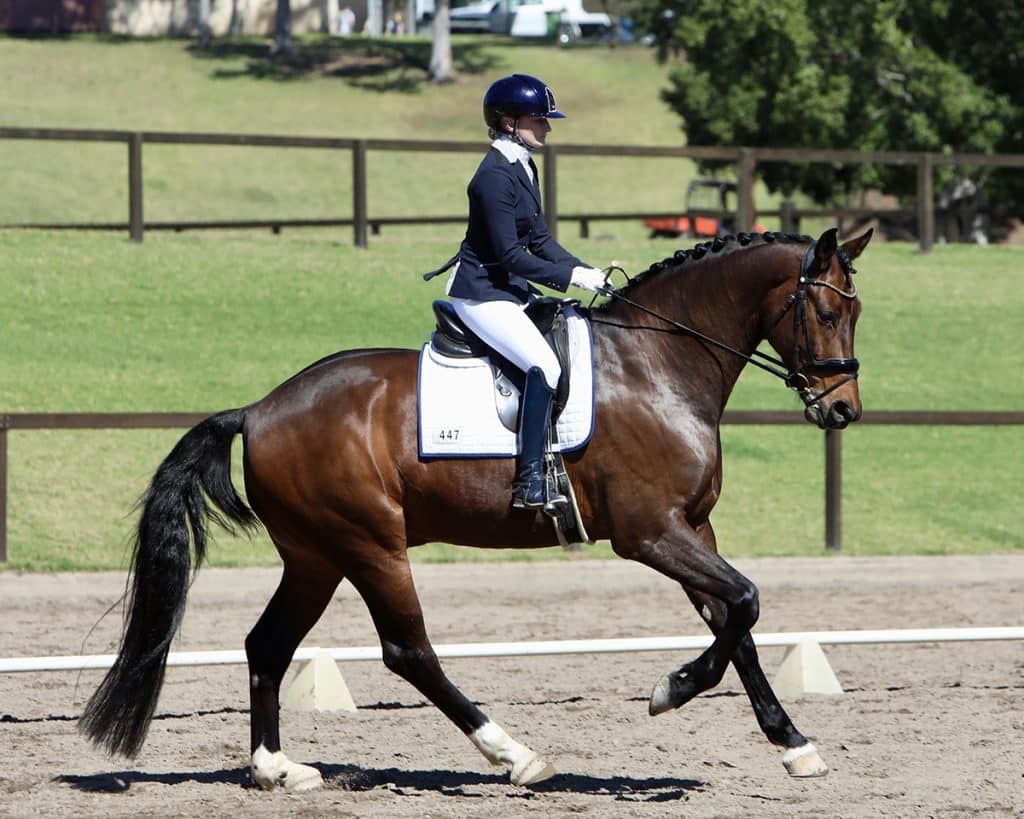
Sydney Evans and EPH Finnian. Image by Roger Fitzhardinge.
With 33 horses in the Open Preliminary field, there was an extraordinary variety of types and ways of going. And that is precisely why Preliminary tests can be so difficult to judge. It is perhaps the level where subjectivity really comes into play.
There was, nevertheless, a very clear Open Preliminary Champion in Riley Alexander and Valerio, finishing on 70 championship points after winning both tests.
There was then an equality on 67 championship points between Sydney Evans and EPH Finnian and Emma Adams and Jazelle KP. To split the tie, the percentages from the two tests were combined, with the higher overall percentage determining the placing. It was Sydney Evans and the beautiful EPH Finnian who took Reserve Champion.
What a wonderful couple of classes to watch — a very exciting glimpse into the future, with an interesting and diverse group of horses that certainly could not have been easy to judge.
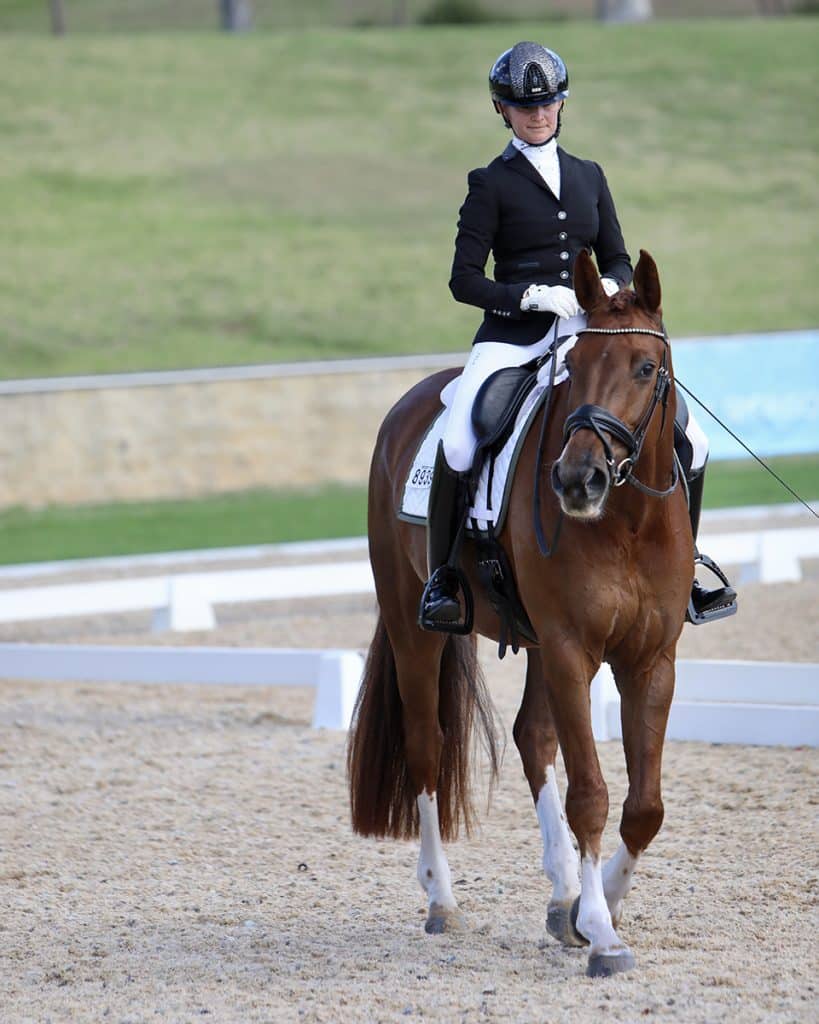
Emma Flavelle-Watts and Belrock Sancia. Image by Roger Fitzhardinge.
NOVICE CHAMPION
The MC Equine Surfaces Open Novice Championship produced some exceptional scores, with Belrock Sancia, ridden by Queensland’s Emma Flavelle-Watts, emerging as the standout combination.
Belrock Sancia scored an outstanding 81.563% in the Novice 2.2, with both judges awarding more than 80%. It was a commanding performance and a score that immediately marked this combination as one to watch.
Emma and Belrock Sancia backed that performance up by winning the Novice 2.3 on 77.072%, securing the Novice Championship with two very convincing victories.
“The class again
highlighted the depth of
quality coming through
at the lower levels…”
Phorce Fields Quebec, ridden by Rebecca Rooke, finished second in the 2.2 on 73.75%. Sydney Evans on EPH Finnian were third on 73.047%. Rachael Clarke and CJP Qudos were third in the 2.3 on 70.072%, and placing sixth in the 2.2 on 68.907%.
The class again highlighted the depth of quality coming through at the lower levels and the increasingly impressive standard of young dressage horses being presented.
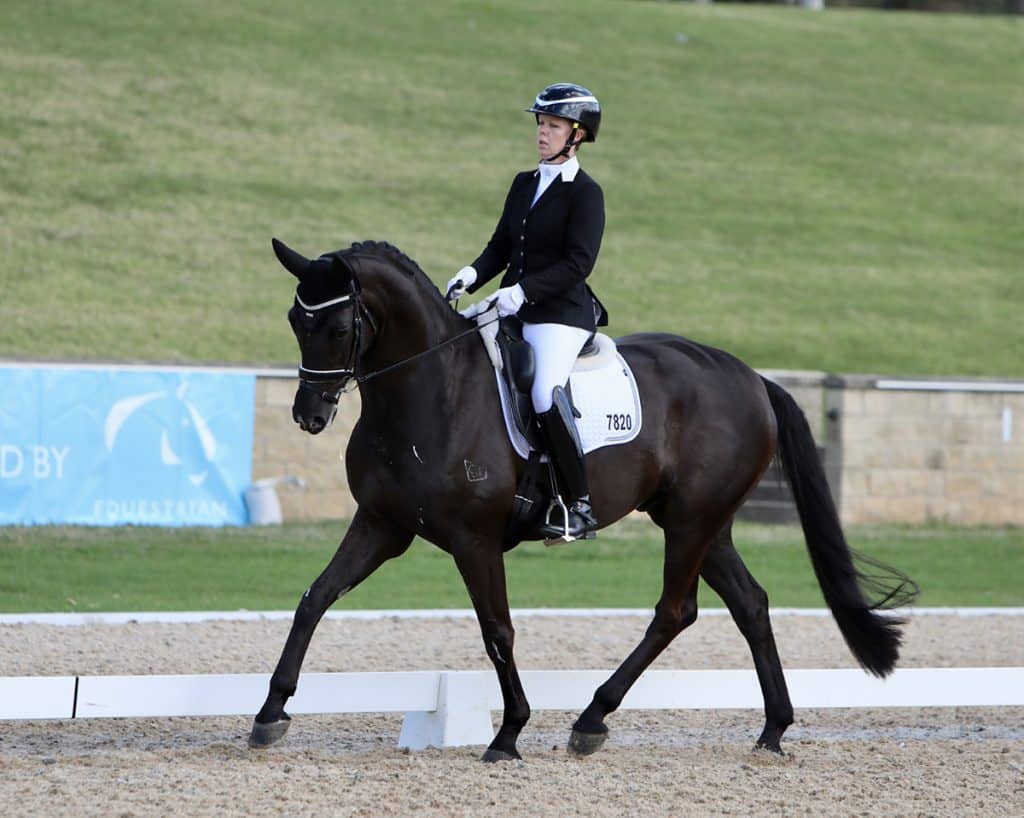
Rachael Clarke and CJP Qudos. Image by Roger Fitzhardinge.
ELEMENTARY CHAMPION
It was onto the REC Equine Specialists Open Elementary classes and again a fantastically competitive group of horses, with the Championship going to the imported Furst Sir, ridden by Caroline Hooper, and Reserve Champion to David McKinnon and Macarthur Sequoia.
Furst Sir is one of the most elegant horses at the competition. Over 17 hands, modern and uphill, he has flowing and elastic paces.
In the 3.2, Furst Sir scored 70.938%, with one judge awarding 74% to place him first and the other 67.875% to place him fifth. The quality of this horse, the riding and the test was remarkable: uphill throughout, steady in the contact, with elastic and ground-covering strides.
This combination scored several eights in the trot work, and understandably so. There were also eights for transitions and medium work, while one change-of-rein including counter-canter produced marks ranging from 4.5 to 8 — another example of just how differently judges can see the same work.
Furst Sir, or ‘Paris’ as he is known, certainly struck an elegant pose and turned many heads. Paris looks like a horse destined for a big future.
In second place in this test was David McKinnon and Macarthur Sequoia on 69.875%, with one judge having them first on 73% and the other awarding 66.750% to place them fourth.
In the Elementary 3.3, Furst Sir again came to the fore with 72.378%, ahead of Macarthur Sequoia on 71.098% (albeit with a penalty), with Shane Ackerly and BZ Qantas third.
The Open Elementary Championship was fascinating for the different conformational types and ways of going represented near the top. There was also plenty of talent evident from combinations including Daisy Fielding and Remi Victoria’s Secret, John Thompson and Zaire Mi, and Linda Foster and Everton Vitality.
At this level, accuracy and attention to detail begin to become increasingly important. There were combinations showing considerable quality that lost valuable marks through inaccurate riding or a lack of polish in the smaller details. With horses of this standard, those marks can make all the difference.
Caroline Hooper and Furst Sir were worthy Elementary Champions, with David McKinnon and Macarthur Sequoia taking Reserve.
MEDIUM CHAMPIONSHIP
The Johnsons Natural Formula Medium Championship again produced outstanding performances and very close competition. In the 4.3, it was again Furst Sir and Caroline Hooper who took the win, scoring 71.282%. Unfortunately, they incurred an error-of-course penalty after missing the halt and rein-back — an error that ultimately proved extremely costly when the overall championship was decided.
In second place was Sophia Redenbach and Hollands Bend Francine on 70.962%, with Sally Rizzuto and BC Memphis third, also on 70.962%. Katharine Farrell and Aber Fashion MI, a beautiful black mare, finished on 69.487%.
Looking through Furst Sir’s score sheet, there was some outstanding work. He received several eights through the trot work and walk, including for a pirouette, as well as excellent marks in the canter half-passes — including a nine for one half-pass.
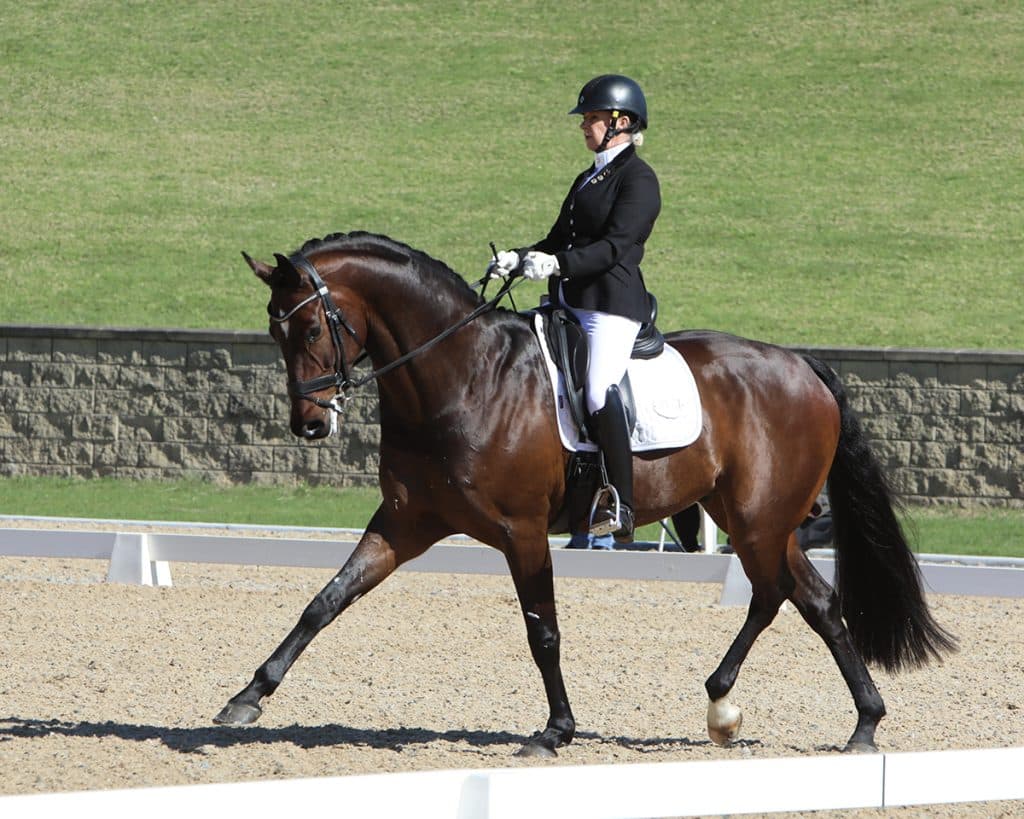
Caroline Hooper and Furst Sir. Image by Roger Fitzhardinge.
Unfortunately, there was a low mark for a flying change that was not quite on the aids. The change happened, but after the marker. Nevertheless, this was a very impressive test from a horse contesting one of his first Medium competitions.
It was interesting to compare the horses at the top of the class. The second-placed Holland Bend Francine was a very different type — a shorter-coupled black mare, quite expressive, although showing a degree of tension.
In the Medium 4.2, Sally Rizzuto and BC Memphis rose to the top with an impressive 72.906%, unanimously placed first by the judges. In second was John Thompson and Finesse MI, producing a cracking test for 70.743%, while Caroline Hooper and Furst Sir scored 70.135% to finish third.
BC Memphis, by Morricone out of a Sandro Hit mare and owned by Vicki Newham, is still a relatively young horse at this level. He is a very expressive horse through the trot work, and the clean flying changes were crucial to winning this test.
It was a clean, mistake-free performance showing considerable flamboyance and expression. There is perhaps still room for the canter work to become a little more uphill as Memphis develops further strength, but what an exciting horse for the future.
John Thompson and Finesse MI also showed some excellent trot work, with great expression and cadence. It was a mistake-free test, ridden with the accuracy for which John is renowned, and thoroughly deserving of second place.
Caroline Hooper and Furst Sir performed every movement correctly in the 4.2, but unfortunately the horse appeared a little weary and two late flying changes spoilt the overall impression of the test.
Speaking afterwards, Caroline explains: “His changes are good, but he’s still green at this level. He was a little tired and perhaps I rode a little cautiously, which didn’t give him the best opportunity to make two clean changes. I’m really looking forward to the future with this horse. He’s lots of fun, and we now have great confidence between the two of us to move forward.”
The Medium Championship eventually went to Sally Rizzuto and BC Memphis on 68 championship points, with Caroline and Furst Sir taking Reserve Champion, also on 68 points.
With the championship points equal, the percentages from the two tests were combined and the horse with the higher overall percentage determined the winner. As a consequence, Sally Rizzuto and BC Memphis were the deserved Medium Champions.
At this level, clean flying changes become increasingly important, and Memphis produced them when they counted. Had it not been for Furst Sir’s error-of-course penalty in the 4.3, the Champion and Reserve placings may well have been reversed.
Two outstanding horses and an outstanding championship.
ADVANCED CHAMPIONSHIP
For some reason, the Hills Wildlife Sanctuary Open Advanced Championship was decided on the two compulsory tests, with the Freestyle percentages not included in determining the overall Champion.
The Championship was deservedly won by the wonderful chestnut Woodside Quebec, by Quando-Quando and ridden by Robbie McKinnon, with Sydney Evans and U Beauty Queen, a striking chestnut mare, taking Reserve Champion.
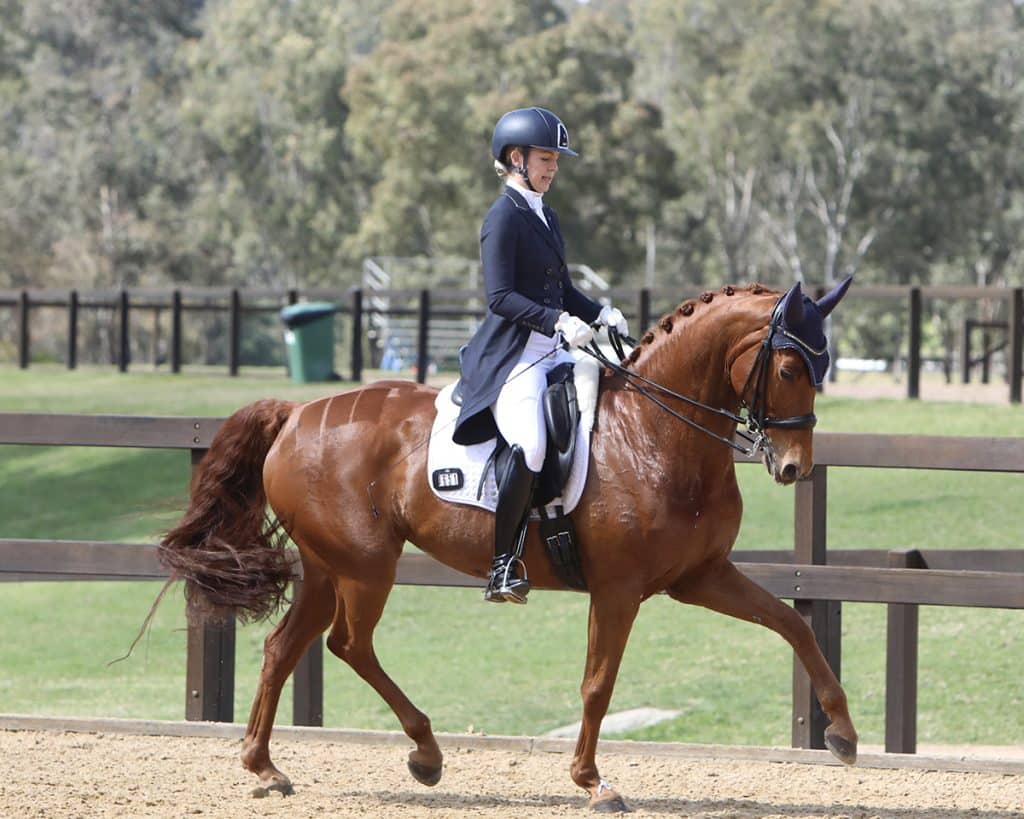
Robbie McKinnon and Woodside Quebec. Image by Roger Fitzhardinge.
What a class this was. In the first test, four horses finished in the 69% range: John Thompson and Finesse MI, Lauren Wheeler and First Pick, Sydney Evans and U Beauty Queen, and Megan Bryant and Dankesohn MBE. It was an extraordinarily close contest, with Quebec only half a percentage point in the lead.
This really demonstrated the quality of the horses and riding at this level. Again, there were very different types of horses presented, but by Advanced level it perhaps becomes easier for the judges to identify the quality and clarity of the training. The suppleness and positioning through the lateral work, the cleanliness of the flying changes and the expression beginning to develop through increased collection all become increasingly important.
In the Advanced 5.3, the positions changed around again and the competition remained exceedingly tight. Sydney Evans took the win on 70.271%, Robbie McKinnon was second on 69.595%, and Megan Bryant third on 69.122%. Interestingly, the actual placings between the two judges were not unanimous, but the percentages remained extremely close — another indication of just how evenly matched these horses were.
In the Freestyle, it was Megan Bryant and Dankesohn MBE who showed the way on 72.908%, producing a fabulous test with great music and some particularly impressive flying changes. The twos and threes were ridden on curving lines with great confidence, and there was excellent continuity throughout the performance. Sydney Evans and U Beauty Queen finished second in the Freestyle on 71.542%. These Freestyle percentages, however, did not count towards the overall Advanced Championship.
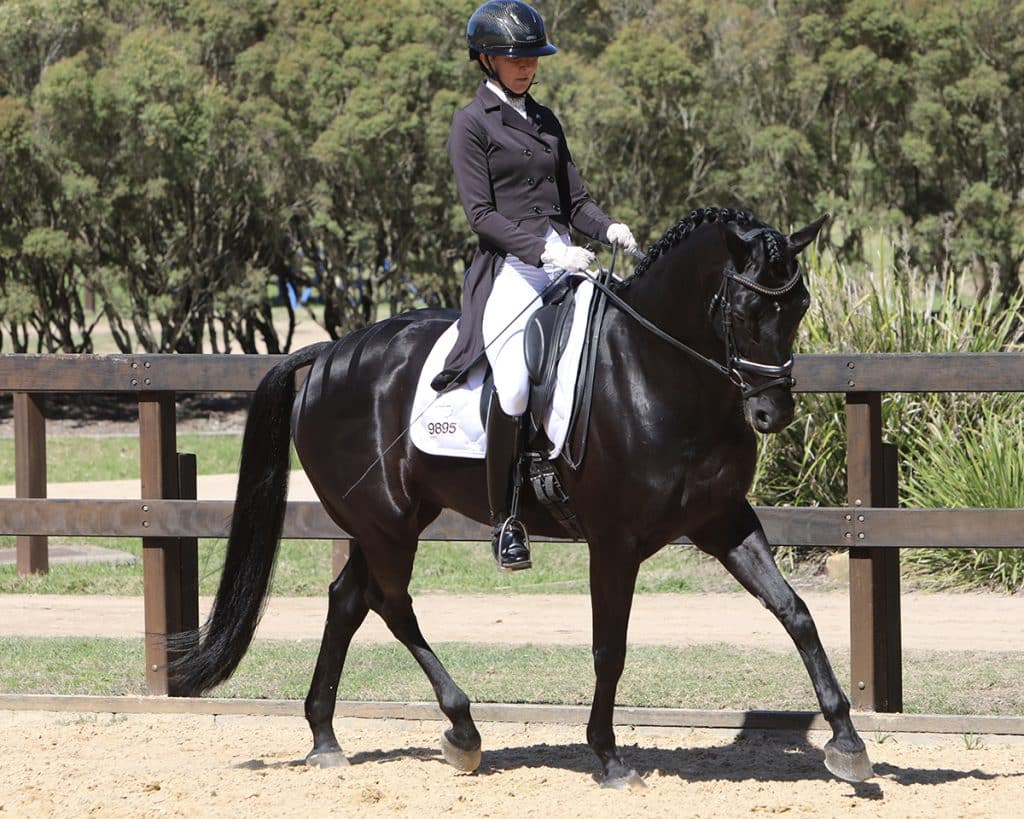
Megan Bryant and Dankesohn MBE. Image by Roger Fitzhardinge.
Woodside Quebec was a thoroughly deserving Champion — elegant, light across the ground and expressive, and, as always, harmoniously ridden by Robbie McKinnon. Reserve Champion U Beauty Queen was a very different type: a big, bold and handsome mare with very correct paces and a wonderfully steady, sympathetic connection to the bridle.
Two totally different horses, but both beautifully trained and presented — a credit to their riders and a wonderful reflection of the quality of this Advanced Championship.
SMALL TOUR CHAMPIONSHIP
In the Rodney’s Photography Small Tour, it was Matthew Dowsley and the wonderful black mare Bradgate Park Delaney, by De Niro, who took the classes with consummate ease.
Matthew is always an outstanding competitor, presenting his horses in a very good frame and showing a clear understanding of every movement — from the initial presentation to the way he prepares, he rides and finishes each exercise.
In the Prix St Georges, Matthew and Delaney scored 71.471% to lead from John Thompson and the beautiful gelding Sicario on 70.098%, with Advanced Reserve Champions Sydney Evans and U Beauty Queen third on 69.804%.
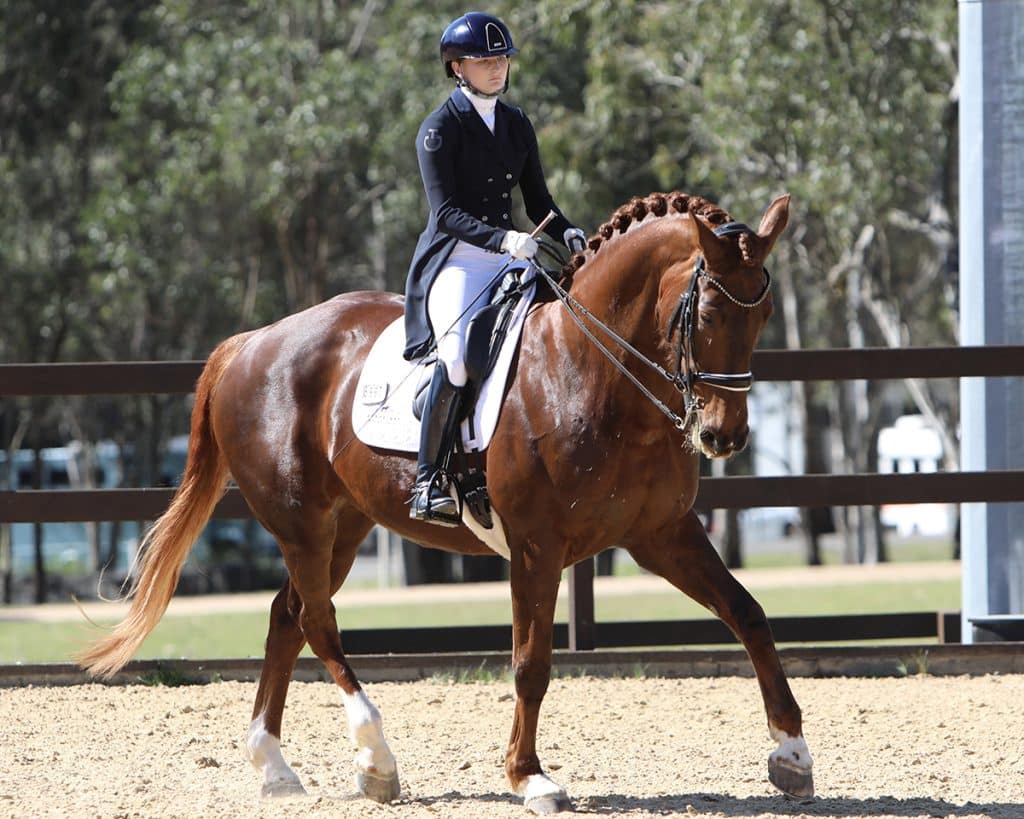
Sydney Evans and U Beauty Queen. Image by Roger Fitzhardinge.
Delaney’s improvement over the past six months has been marked. She is now showing great medium and extended trot with plenty of ground cover and an increasingly uphill feeling. The flying changes are becoming more relaxed, although they could perhaps still show a little more softness.
As always, Matthew’s ability to ride bend and flexion with honesty through the half-passes is inspiring. Having seen this combination piaffe and passage in the practice arena, there is no question they are destined for bigger things at Grand Prix. The pirouettes are also developing a more uphill tendency and attracting better marks. A great horse for the future.
Sicario and John Thompson presented a very different picture. Sicario is an elegant and beautifully conformed horse with a soft and easy way of going. Everything appears fairly effortless, and there is no question that this horse is really gaining confidence at this level and surely will be ready to step up soon.
Another horse attracting a fascinating disparity of marks was Sugarloaf Amnesty, ridden by Celeste Amezdroz. With one judge she was equal first on 71.471%, while another had her on 68.824% and another on 68.676%.
It is interesting to wonder what some judges see and reward while others do not. This mare is shorter and compact, quite correct and very quietly ridden. Perhaps she lacks a little expression and forward desire at times, but she remains correct and produces a pleasing test.
Maddy Vallender also rode a mistake-free test with Isla Bonita 10, with almost all marks seven and above. This mare has only competed in a couple of Inter I tests and certainly shows expression and a lovely elastic way of going. The canter could still establish a little more ground cover, but the changes were clean and she showed a fabulous ability to sit, with excellent uphill balance in the pirouettes. Another combination looking very exciting for the future.
Matthew and Delaney also won the Intermediate I, scoring 70.980% to finish ahead of Maddy Vallender and Isla Bonita 10 on 69.216%. Tia Rose McKenzie placed third on 68.088%.
Despite finishing fifth in a strong Inter I field, there may well have been a reason for some of the tension shown by Celeste and Sugarloaf Amnesty. The music, which was supposed to provide background ambience, became quite loud and intrusive during their test. Celeste had to contend with heavy-metal music, complete with considerable drumming and screeching, which was hardly conducive to the concentration and atmosphere expected for an Inter I test. The mare appeared to become quite tense. Nothing could be done about it at the time, but it certainly offered a possible explanation for some of that tension.
Despite that lower placing, Celeste Amezdroz and Sugarloaf Amnesty bounced back in the Freestyle to score 71.142% for third. Second was Maddy Vallender on 73.167%, while Riley Alexander and Glenhill Vivid took the Freestyle win on an impressive 74.250%.
It demonstrates just how close these championships can be and how a few small mistakes along the way can dramatically alter the scores.
Glenhill Vivid was particularly interesting. An extreme mover, especially in the trot, this mare has enormous activity and expression. She was unanimously placed first in the Freestyle on 74.25%, receiving numerous eights in the technical marks, yet in the compulsory Prix St Georges and Inter I tests, she received scores in the 66% and 64% range.
The mare does not appear to change dramatically in her way of going from one test to another, yet the judges seem to find her particularly difficult to pin down and put marks to. Perhaps tension in the earlier tests contributed to those lower scores. She is certainly a mare with expression, exuberance and a keen attitude to show off.
The Small Tour produced a very good championship. The overall title includes the Freestyle, although surprisingly there were not that many combinations who chose to contest all three tests. In the end, consistency proved decisive. Sugarloaf Amnesty was a deserving Small Tour Champion, while the exciting imported mare for Maddy Vallender was an equally deserving Reserve Champion.
Another extremely interesting group of horses, with several combinations looking ready to progress towards the higher levels.
MEDIUM TOUR CHAMPIONSHIP
In the Regency Floats Open Medium Tour, it was another Championship bow for Celeste Amezdroz, this time with SF Austin, scoring 66.569% in the Inter A, 66.396% in the Inter B and an impressive 69.317% in the Freestyle. Reserve Champion was Susan Elekessy and the wonderful chestnut Callum Park Damascus, one of Susan’s homebred horses and out of a very good mare who has produced several Grand Prix horses.
Callum Park Damascus scored 62.941% in the Inter A, 68.063% to win the Inter B and 66.767% in the Freestyle. This is a horse still finding his feet at a relatively new level, with the scores climbing impressively in one test and then perhaps not quite so high in another as the occasional mistake creeps in.
There is plenty more to come as the horse gains confidence and experience at this level — certainly another one for the future.
For Celeste Amezdroz, it was an amazing NSW State Championships, taking both the Small Tour Championship and Medium Tour Championship. Quite an achievement.
BIG TOUR CHAMPIONSHIP
And now to the pinnacle event of the NSW State Championships — the Australian Horse Arenas Big Tour.
In the Grand Prix, it was Scarlatti Mio VSR and Emma Flavelle-Watts who took the honours, winning on 71.558% and following that with an impressive 74.742% to also win the Grand Prix Freestyle.
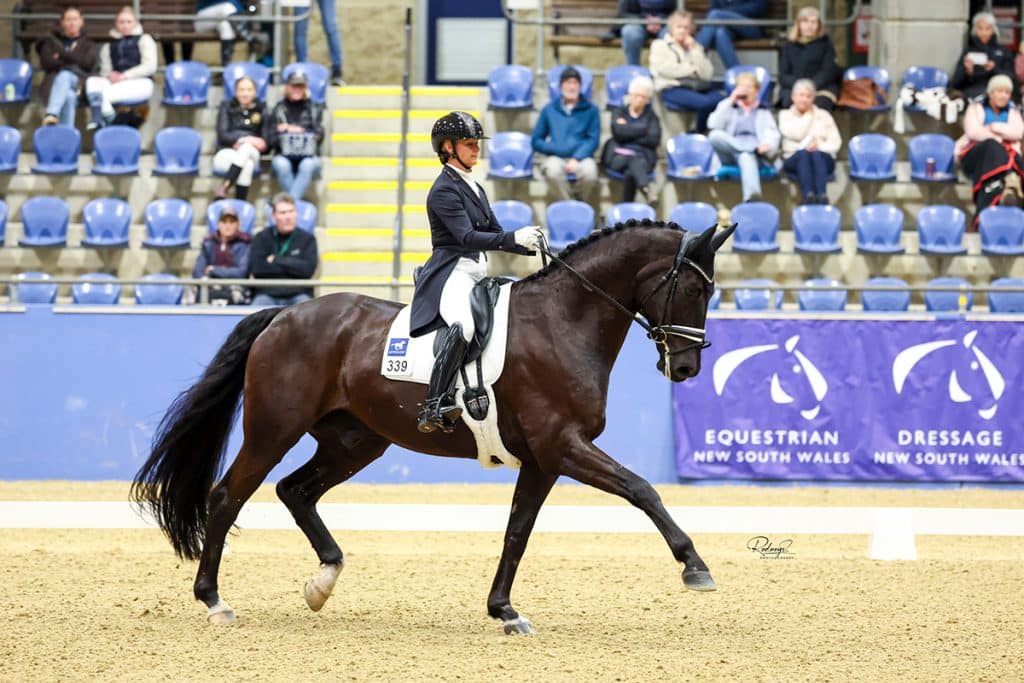
Emma Flavelle-Watts and Scarlatti Mio VSR. Image by Rodney’s Photography.
Reserve Big Tour Champion was Riley Alexander and the exciting, up-and-coming black mare New Star LP, scoring 70.652% in the Grand Prix and 72.883% in the Freestyle.
There is no question that these are two horses with eyes looking towards the 2028 Los Angeles Olympic Games.
New Star LP has completed very few Grand Prix tests and this may well have been her first Grand Prix Freestyle. She is a big, imposing black mare with really expressive piaffe and passage and a wonderfully solid mind. She gets on with the job and appears never to want to give in. She is a very convincing Grand Prix horse for the future. With a little more experience creating greater suppleness and ease, there is every reason to believe the marks will really improve.
Scarlatti VSR for Emma is magnificent. To win both classes with scores comfortably over 70% is something fairly special. This big, imposing and elegant horse shows wonderful trot work, good piaffe and passage, and a canter that continues to improve, becoming more uphill, ground-covering and expressive.
There is certainly still plenty of room for Emma to put more power into this horse as his confidence develops.
It was a wonderful championship for Emma, who made the trip down from Queensland and enjoyed success not only at Grand Prix but also with her exciting young Novice horse.
The youngster had never travelled more than two hours from home before this trip and Emma was ecstatic with the horse’s performance at the championships — kind, calm, easy and uncomplicated. The trip to SIEC provided invaluable co
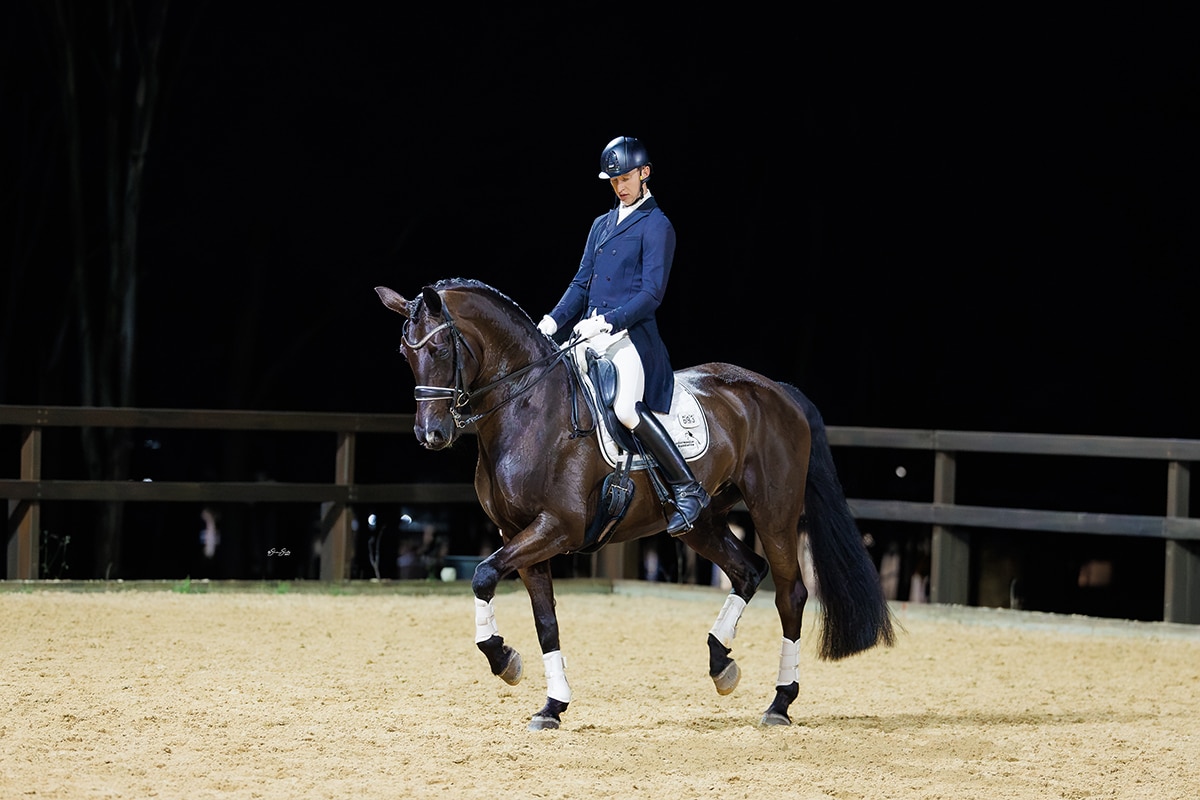
Riley Alexander and New Star LP. Image by Simon Scully Photography.
A CHAMPIONSHIP TO REMEMBER
What a show, and what fabulous competition. It must also be remembered that there were many more classes beyond the Open Championships discussed here, including Para-Dressage and Virtus Equestrian classes. You can read a full report on these from Amylie Hines here.
There were good numbers throughout the Amateur Owner Rider (AOR) divisions, from Preliminary all the way through to FEI level. There were also Pony classes across the levels, producing some wonderful performances and excellent percentages.
What a huge success the Regency Floats NSW State Dressage Championships proved to be. Magnificent new surfaces, riders smiling, happy and confident horses, wonderful weather and, above all, some outstanding percentages and performances from Novice right through to Grand Prix.
The new surfaces have given SIEC the footing that competitors have wanted for so long. The quality of horses throughout the levels demonstrated that Australian dressage has plenty to be excited about.
From the young horses taking their first steps into competition to the Grand Prix combinations with ambitions extending all the way towards Los Angeles, this was a championship full of quality, interesting judging, exciting prospects and, most importantly, some very good dressage. EQ
Related articles

A little over a year ago, dressage rider Warwick McLean never expected to represent Australia at the 2026 FEI World Championships in Aachen. In fact, he had only just purchased the horse that would take him there, and the plan was to sell him.
With the 2026 breeding season approaching, International Horse Breeders principal Glenis Dyason highlights leading Hanoverian-ranked stallions available through frozen semen. From proven performers to emerging sires, Australian breeders can access top dressage and jumping genetics.